Wednesday, October 3, 2012

Bohr's Dueling Discovery

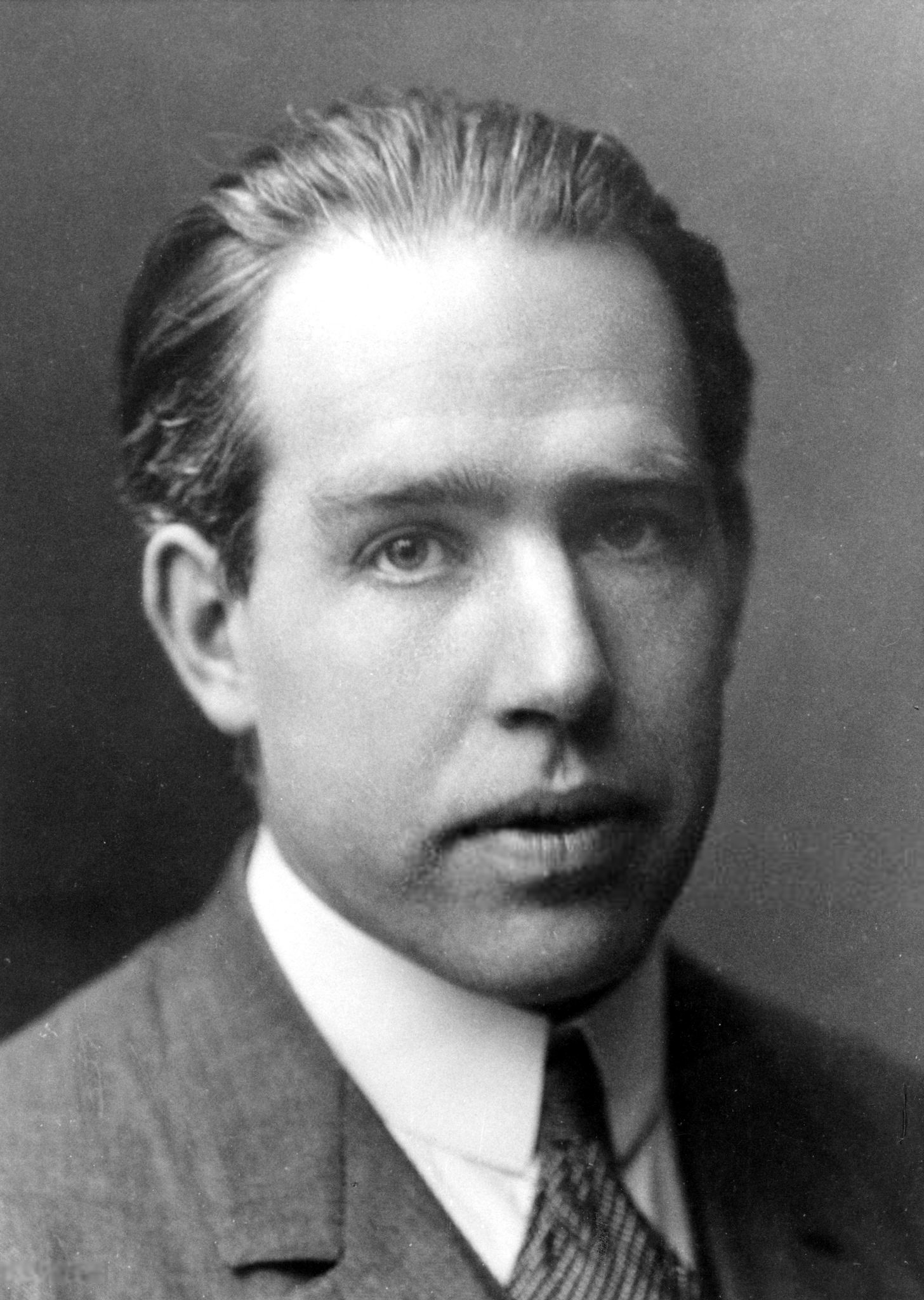
Niels Bohr (1885-1962)
Unfortunately this summer I wasn't able to finish as many posts as I had hoped, so rather than a full post today, here is a tidbit.  As per the latest poll, up this week is Niels Bohr! But there is a lot to talk about, particularly with respect to the atom, so instead, I'll talk about something you probably didn't know. One of Niels Bohr's contribution to science derived from his love of western films. He noted that the bad guys always drew first, but the good guys always won, and wondered if it was actually the case that the person who drew second won more often. He went out and purchased some cap guns and "dueled" his friends to find out. Sure enough, always drawing second, he won. Recently, proving that Bohr didn't just have faster reflexes than his friends, Andrew Welchman at the University of Birmingham confirmed that the second person to draw is milliseconds faster to the trigger. So stick to your hobbies!  You never know where they may lead.

References

Friday, August 10, 2012

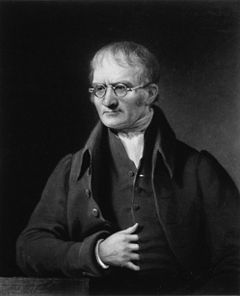
John Dalton: Atoms, Weather, and Vision

John Dalton
1766-1844
Since one of my undergraduate degrees was in chemistry, I cannot believe that to this point I have only written one post that warranted the tag of "chemists." So this post is an attempt to remedy this. In looking at the lists of names that I have as potential subjects for blog posts, the first that jumped out at me were Henderson and Hasselbalch, famous for the equation for determining the pH of a buffer solution.  But I try to mix up the time periods that I write about, which either means that you, my readers, do not get bored or that you get horribly confused.  If it is the latter, I apologize.  I would have guessed that the Henderson-Hasselbalch equation was developed in the nineteenth century, but it ws actually in the 20th century, which eliminates them from consideration at the present time.  So instead, I have decided to write on John Dalton, of Dalton's Law of Partial Pressures, which you may (or may not) remember from high school chemistry. Dalton is also well known for his work in developing modern atomic theory.  Whether or not you know much about either of these topics, it is easy enough to find information on his contributions in these areas.  So I would like to focus in this post on two areas that receive less attention, his meteorological observations and studies on color blindness.

Dalton's System of Chemical Philosophy
Dalton's atomic and
molecular symbolism, from
A New System of Chemical Philosophy
Dalton’s interest in meteorology began while he was at school in Kendal, where he made the acquaintance of John Gough, who was nine years his senior.  It was he who first suggested that Dalton keep a meteorological journal.  Dalton made observations throughout his long life, including a measurement made the day before his death.  His first book of observations, Meteorological Observations and Essays, was published in 1793, with a second edition little changed from the first appearing in 1834.  While some of the book is simply his observations, he also included descriptions of many of the techniques used in making observations of the weather in use at the time.  He noted in the preface that “as the number of [barometers and thermometers] is increasing daily, many of them must fall into hands that are much unacquainted with their principles.”  In addition to writing about barometers, thermometers, hygrometers, thunderstorms, snows, winds, and the Aurorae Boreales, he also included essays regarding these phenomenon, particularly Aurora Borealis and its connection with magnetism.  It was his study of the atmosphere, a gas, that probably led to his interest in gases in general, which finally led him to his theories of atomic structure.  He also attempted to come up with the structures of many molecules, but was not always right since he didn’t know how much each atom actually weighed.  For instance, he thought that water was HO (one hydrogen atom and one oxygen atom) rather than H2O.

John Dalton also put much thought into color blindness, a condition that he suffered from. He gave a lecture at the Manchester Literary and Philosophical Society, of which he was a member, in 1794, describing the inconsistencies that he observed between how he saw color and how those around him saw colors.  He wrote to a friend that “the flowers of most of the Cranesbills appear to me in the day almost exactly sky blue, whilst others call them deep pink.” (The Worthies of Cumberland: John Dalton, p. 101) He also noted that his brother and he agreed on the colors of things, which to modern ears suggests that it was genetic color blindness.  Dalton suggested that the cause of the difference between  his vision and others was that the fluid in his eye was tinted blue.  As a true scientist, he suggested that his eyes should be dissected after his death to see if this was true.  It was not, but the eyes were preserved by the Manchester Literary and Philosophical Society and recently the DNA was examined, showing that Dalton lacked one of the three photopigments in the eye.  (If you wish to see the present state of his eyes and related images, I suggest you go to http://www.sciencephoto.com/set/803.) This theory of photopigments had been proposed by Thomas Young (1773-1829), one of Dalton’s contemporaries who established the wave theory of light, but even though Young’s view was more correct, color blindness has been historically called Daltonism. This just goes to show that you don’t have to be right to be remembered, you just have to be the first, or perhaps the clearest.


Selected Works by Dalton
References and further reading

Sunday, July 15, 2012

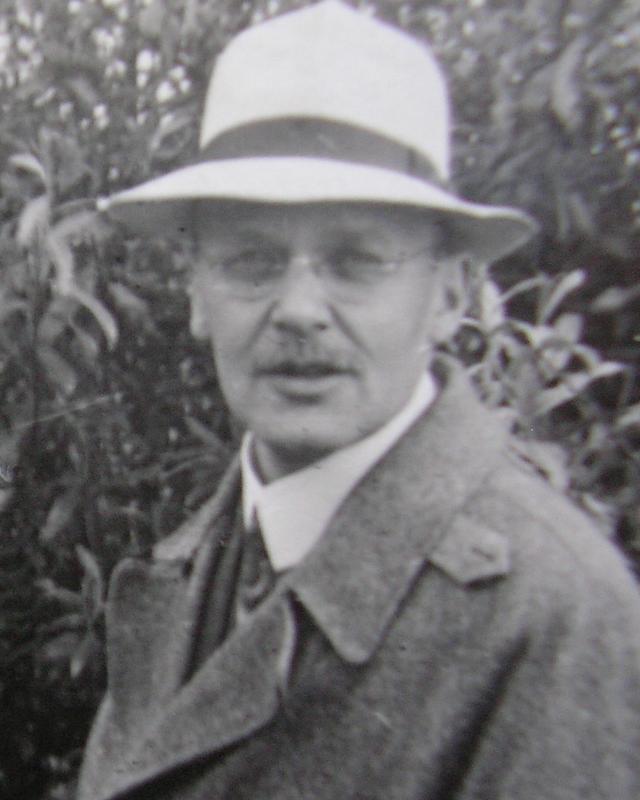
Hans Geiger and the Geiger-Müller Counter

Hans Geiger (1882 - 1945)
The first SciHistory poll is responsible for the subject of this latest post, Hans Geiger.  I will try to always have a poll open, so when you stop by, vote!  And remember that you can always leave suggestion in the comments, even if it isn't at all relevant to the subject of the post.  But on to more serious business. (And I do apologize.  In rereading this post, it is kind of dull.)

Hans Geiger was born in Germany and received his PhD from the University of Erlangen in 1906.  After graduating, he went to England to work at the University of Manchester with Ernest Rutherford (1871-1937), who won the 1908 Nobel Prize in physics for his work with radioactive substances.  One of the first projects that Geiger collaborated on in Rutherford's lab was the famous gold foil experiment, also called the Geiger-Marsden experiment (Marsden was an undergrad working with Geiger) or the Rutherford experiment.  In this experiment, where helium nuclei (alpha particles) were fired at a thin sheet of gold, Rutherford hoped to better understand the actual composition of atoms.  When some of the particles deflected at very high angles, a reasonable explanation was that rather than having the mass of an atom spread fairly evenly, there must be a highly concentrated nucleus to an atom.  This experiment was vital to the modern understanding of the structure of the atom.

Geiger continued to work with alpha-particles, developing the first detector for alpha particles in 1908.  This consisted of a wire in a low pressure chamber with a voltage applied across the wire and the outside of the tube.  The voltage is high enough that a current can almost, but not quite, flow through the gas. When an ionizing particle came into contact with the wire, it disturbs the system enough to complete the circuit, and the resulting completion can be detected by an audible click or by a pointer, depending on the type of counter. Design variables included the applied voltage, the pressure inside the chamber, and the length and diameter of the tube. Geiger continued to try to make more sensitive devices, and in 1913, after returning to Berlin to work at the German National Institute for Science and Technology, created a more sensitive device that used a needle that stuck into the middle of the detecting tube, rather than a wire connected at both ends.  This version was able to detect both alpha and beta particles.

Geiger served as an artillery officer during World War I, and when he returned to direct radiation research at the University of Kiel and the University of Tübingen, and later at Technische Hochschule in Berlin. It was while working with a post-doc, Walther Müller, at Kiel, that the next breakthrough in the Geiger counter occurred.  Geiger wanted Müller to determine the precise effect of a positive ion on the counter, and in general to test different configurations, voltages, polarities, etc.  It was as a result of this that Müller discovered a configuration that lead to an increase in sensitivity of about 100 times, which is why in many publications and discussions of Geiger counters, one finds them called Geiger-Müller counters.  The increased sensitivity of this counter made them more useful for the detection of cosmic rays, which were a subject of much interest around that time.  They could also be combined with cloud chambers to watch electrons moving individually.

After this discovery, the sources that I have found don't talk about what Geiger did next much.  He continued researching radiation in various forms, including cosmic rays and nuclear fission.  He was involved in the German efforts to create a nuclear bomb, and died a few months after World War II ended.  What I find most interesting about his story is that he, more than many of the other people that I have written about so far, worked in collaborations.  The gold-foil experiment was done with Marsden, but the conclusions about the atom were Rutherford's.  The improved Geiger counter was the work of a student.  I think this way of doing research is much more what we are familiar with today, when papers can have ten co-authors and, especially as a graduate student, one's advisor's name is on everything.  Clearly, Geiger made important contributions, but he was not working alone.


Works by Geiger
References and Further Reading
  • "Hans Geiger". Encyclopædia Britannica Online. Encyclopædia Britannica Inc., 2012. Accessed July 13, 2012.
  • Thaddeus Trenn, "The Geiger-Müller Counter of 1928", Annals of Science 43, 2 (1986), 111-135.
  • "Geiger Counter", Lemelson-MIT Inventor of the Week, February 2005.
  • M. Walter and A. W. Wolfendale, "Early history of cosmic particle physics", The European Physical Journal H (2012). doi:  10.1140/epjh/e2012-30020-1
  • Paul Frame, "A history of radiation detection instrumentation", Health Physics 88, 6 (2005), 613-637.

Friday, June 22, 2012

Arnold Sommerfeld: Father of Quantum Physicists

Arnold Sommerfeld
(1868-1951)
Arnold Sommerfeld is a man that I had not heard of until taking a course in solid state physics.  And I apologize to those of you who may hear the name with dread, but despite creating the Sommerfeld Equation, he really is an interesting guy, so please stick with me.  And I will only mention the Sommerfeld Equation one more time.  While he appears to have been known in his own time as a great mathematician and physicist, he is even better known by the students that he advised.  These include Werner Heisenberg, Wolfgang Pauli, Peter Debye, and Alfred Landé, among many others.  And these are just the students considered to be his advisees by the mathematics genealogy project.  Others famous men who studied with Sommerfeld include Linus Pauling, Léon Brillouin, and Rudolf Peierls.  He also has the unfortunate honor of being the man between 1901 and 1950 to receive the most nominations for a Nobel Prize without actually winning one, receiving eighty-one nominations.

Arnold Sommerfeld was born in 1868 in Germany, and studied mathematics and natural science at the University of Köningsberg, receiving his PhD in 1891.  He was an assistant professor at the University of Göttingen in mathematics and in mineralogy, before becoming a professor of mathematics at the Mining Academy of Claustel and then a professor of mechanics at the Institute of Technology of Aachen.  In 1906 he become the head of the Department of Theoretical Physics at the University of Munich, a position that had previously been held by Ludwig Boltzmann.  The University of Munich was well known in the field of theoretical physics, so this was both a great honor and a wonderful opportunity for Sommerfeld to influence a new generation of physicists.  He taught there from 1906 to 1935, when he retired.

When he receive the post of chair of Theoretical Physics, Sommerfeld wanted to learn more about the field, since he himself was a mathematician, not a physicist.  He asked Abraham Joffe, who had helped to discover x-rays, for help in understanding physics.  He suggested that they meet every morning at a café to discuss experimental physics, and these discussions quickly included many more scholars eager to discuss new ideas. Apparently he was a great lecturer, and was able to explain the complexities of atomic structure and other confusing topics with great clarity.

His research started out in the field of the propagation of radio waves, which now seems rather outdated, but at that time was of vital importance.  The telephone had been developed in the late nineteenth century, but by 1900, most people conveyed important communications by telegraph.  While telegraphs traveled by wires in many parts of the country, telegraphs to ships required radio waves, and the difficulties with sustaining a cable across the Atlantic meant that transatlantic communications would have to be by radio waves.  The first wireless telegraph was patented in 1897 by Guglielmo Marconi (who shared the Nobel Prize in physics in 1909 for his work with wireless telegraphy), and the first transatlantic telegraphic communications via radio waves were accomplished in 1901.  Sommerfeld's 1909 paper "The Propagation of Waves in Wireless Telegraphy" was thus of vital importance at the time, and has been oft cited.

As well as working with radio waves, Sommerfeld also worked with x-rays, still a very new and mysterious phenomenon, and his student Max von Laue showed that x-rays are also an electromagnetic wave (and won a Nobel Prize for it).  Sommerfeld went on to develop the relativistic quantum theory of the fine structure of the hydrogen spectrum.  Quantum theory is difficult enough, but adding relativity is quite an accomplishment.  I first met the name Sommerfeld when considering the electronic theory of metals, where he developed the Sommerfeld Equation as a method to approximate functions as a function of temperature. He is also famous for his work with atomic theory and atomic physics, in the end publishing a six volume series on the subject of theoretical physics and going on two lecture tours in the United States.  Unfortunately, however, he met his death as a result of an automobile accident in 1951.  As Linus Pauling wrote, "The hazard of a mechanized world has prevented his students from celebrating during his lifetime still further anniversaries of the birth of this great man."


Other works by Sommerfeld
  • "Über die Ausbreitung der Wellen in der drahtlosen Telegraphie (The propagation of waves in wireless telegraphy)", Ann. der Phys., 28 (March 1909), 665-736. (This is the same as volume 333.  They renumbered them in 2010.)  doi: 10.1002/andp.19093330402
  • "Über die Ausbreitung der Wellen in der drahtlosen Telegraphie (The propagation of waves in wireless telegraphy)", Ann. der Phys., 81 (December 1926), 1135-1153.  (Now volume 386) doi: 10.1002/andp.19263862516.

References and further reading

Sunday, April 15, 2012

Svante Arrhenius: A Man of Many Interests

Svante Arrhenius
(1859 - 1927)
I'm sorry it's been awhile since my last post, but classwork caught up with me at last. I've been planning to write on Svante Arrhenius for two months now, when he came up in several homework assignments at the same time, and I expected this to be a simple post to write, since Arrhenius is best known, in my opinion, for his equation connecting the activation energy of a process and its kinetics. First, I found out that this was not the work for which he earned the Nobel Prize in Chemistry, and, more surprisingly, I discovered that he was also one of the first scientists to work out the effects of the greenhouse effect and he also postulated global warming resulting from human CO2 production. So between classwork, research, and Arrhenius being a more complicated person to write on than I though, this post has taken a while.  I will do my best to represent what Arrhenius actually wrote about global warming, but I can't read everything he wrote about the subject for this short post, so if you are curious, I would encourage you to look at some of his original writings, which are referenced and linked throughout.

Arrhenius was born in Vik, Sweden, in 1859.  His father was a land surveyor associated with the University of Uppsala, and the following year the family moved to Uppsala.  Here Arrhenius studied at the cathedral school, showing aptitude in mathematics.  He studied chemistry, physics, and mathematics at the University of Uppsala, but wanted a more rigorous physics education and went to Stockholm to study with Erik Edlund.  His work there resulted in his thesis, "Investigations on the galvanic conductivity of electrolytes."  This post's moral for graduate students is don't be discouraged if people think your ideas are wrong.  When Arrhenius submitted this thesis to the University of Uppsala, some of the professors were doubtful of its merit.  He proposed what is now universally accepted, that some chemical species dissociate in water into positive and negative ions, and that the degree of dissociation can depend on the concentration.  Michael Faraday (1791-1867) had already proposed ionic species, but only in the presence of an electric current.  In the end, his thesis was accepted.

One of the main proponents of his ideas was Wilhelm Ostwald (1853-1932), with whom Arrhenius was able to work as a result of a travel grant from the Academy of Sciences in the late 1880s.  He also worked with Ludwig Boltzmann (1844-1906), an Austrian physicist who was a proponent of the atom and a developer of statistical thermodynamics; Jacobus van 't Hoff (1852-1911), a Dutch chemist who studied, among other things, chemical kinetics and osmotic pressure; and Frederich Kohlsrauch (1840-1910), a German physicist also interested in the conductivity of electrolytic solutions.  Arrhenius's theory of electrolytes helped to explain some abnormalities in osmotic pressure data that van 't Hoff had found, and his discussions with these men enabled him to elaborate on his theory of dissociation to explain increases from the expected boiling point elevations and freezing point depressions in some materials by species dissociation.  These men were all instrumental in the formation of the modern field of physical chemistry. It was for this work, begun in his dissertation, that he won the Nobel Prize in Chemistry in 1903.

As I mentioned before, Arrhenius also studied the greenhouse effect.  The greenhouse effect, that the Earth's atmosphere can trap heat from the sun, had been proposed earlier by Joseph Fourier (1768-1830) in the 1820s.  John Tyndall (1820-1893), proved that both water and carbon dioxide can act as what we now call greenhouse gasses.  Arrhenius took their ideas and applied them to the question of whether the cycles of ice ages could be explained by changes in carbon dioxide in the air.  He did the extensive calculations to show that if the amount of carbon dioxide in the air doubled, the temperature of the earth would increase by five to six degrees Celsius.  He published these findings in the the Philosophical Magazine and Journal of Science under the title "On the Influence of Carbonic Acid in the Air upon the Temperature of the Ground" in 1896.  He had worked with his friend Arvid Högbom (1857-1940), a professor of geology at the University of Uppsala, who had considered carbon dioxide cycles over time.  Arrhenius went further, and in his book Worlds in the Making (1908, p. 54), suggested that the burning of coal could be leading to an increase in carbon dioxide in the atmosphere, though much of it is absorbed into the oceans.

Arrhenius lived for thirty more years and did many more things, including being the head of the Nobel Institute for Physical Chemistry.  But, I've gone on for a bit about him already and hit some of the highlights, so I'm going to stop here.  If you are still interested in Arrhenius, you might want to look up his writings on popular science (including Worlds in the Making and Life of the Universe); his work on hydroelectric power, the electrification of the Swedish railroads, and immunochemistry; and his successful efforts to obtain the release of scientists made prisoners of war during World War I.  But to touch on those would mean more for you to read, and, more importantly, more for me to research, so I will leave Arrhenius with that.


Other works by Arrhenius


References and further reading

Friday, February 17, 2012

Brook Taylor: Much More than a Series

Classes and research have been keeping me busy, so this post will also be on someone I have been tackling in my homework this week.  One of the main things that I have learned in graduate school thus far is that none of the equations we use are "correct."  They are all approximations of one sort or another, whether because we can't solve the real equation or because we can't take into account all of the interactions.  One of the most common tools for these approximations, when we have an equation but don't want to deal with it, is to use the Taylor expansion.  I hadn't given it or him much thought until this week, but they just keep popping up, so Taylor is this week's subject.

Modern chemistry seems to have developed in the 19th century.  That's when scientists finally agreed that atoms exist, and developed the modern concepts of energy and heat.  Mathematics, however, seems to have had a heyday in the 18th century based on the number of mathematical operators, functions, rules, etc. that have been named after the mathematicians of that century. These include Laplace, Lagrange, L'Hopital, Maclaurin, Euler, Gauss, Fourier, Legendre, and, of course (or else this interlude would be rather pointless), Brook Taylor.

Brook Taylor
(1685-1731)
In reading about Brook Taylor, I realized that, more than anyone I have discussed so far, I feel that I cannot do him justice.  This stems from two main causes: my lack of understanding of the finer points of mathematics and its history, and the number of interesting things that I discovered about Taylor.

Brook Taylor was an Englishman, born in 1685.  He went to St. John's College at Cambridge and studied mathematics, which was apparently quite popular in those days.  He began writing and publishing on mathematical subjects, but didn't publish soon enough after his discoveries to avoid trouble.  In 1708 he developed a solution to the problem of the center of oscillation.  I still haven't quite figured out what this is, but apparently it was a big deal.  He didn't publish his discovery, however, until 1713: De Inventione Centri Oscillationis.1

Meanwhile, Johann Bernoulli had independently come to the same discovery, and argued about precidence with Taylor.  In 1715 he published Methodus Incrementorum Directa et Inversa, which first introduced to the public what became known as Taylor's Theorem.  The work was also the first discussion of what came to be known as the calculus of finite differences, for more information on which you will have to ask a mathematician.  Taylor was not the first person to use the series, but he made the most general form of it.  Specific instances had already been used by Edmond Halley, Isaac Newton, Johann Bernoulli, and Johann Kepler.  The importance of the series was overlooked for many years, until it was pointed out by Joseph Lagrange in 1772.  Other problems that he solved in this book involved oscillations of a string and a change of variables formula.  He also write papers and letters on the subjects of magnetism, the movement of fluids, and logarithms.  His writing, however, suffered from a brevity that lead to confusion about what he actually meant, which led to his being under appreciated for all of the contributions that he made to mathematics.

In 1715 Taylor also published a work on linear perspective, followed in 1719 by New Principles of Linear Perspective, in both of which he used mathematics to explain linear perspective more generally than those before him had.  Bernoulli, with whom Taylor had already had heated arguments, declared that the book was "abstruse to all," especially artists.  Bernoulli's objections were so strong that Taylor wrote a reply in the Philosophical Transactions, Apologia D. Brook Taylor, J V D. & R S. Soc. contra V. C J. Bernoullium, Math. Prof. Basileae. I think Bernoulli had a point, though, since Taylor's works on perspective contained no sketches, just written descriptions, and even when he wasn't writing about art, he had a tendency to be concise to the point of confusion.

Taylor had been elected a member of the Royal Society in 1712, and had sat on the committee which adjudicated between Newton and Leibniz on the issue of which had invented calculus (they sided with Newton).  After about 1715, Taylor began writing more philosophical papers, such as "On the Lawfulness of Eating Blood."  His final paper in the Philosophical Transactions was "An Account of an Experiment, Made to Ascertain the Proportion of the Expansion of the Liquor in the Thermometer, with Regard to the Degrees of Heat," published around 1721.  He seems to have focused more on domestic matters and his health after that time, for in 1721 he also married.  His father disapproved of his wife, which suggests that Taylor, for one, married for love.  When she died in childbirth two years later, however, he and his father became reconciled.  In 1729 (1725?) he married again, but she also died in childbirth.  Taylor died just one year later.


1. Most articles I found said that it wasn't until 1714 that he published it, but I think this is the article in question, and according to Jstor it was published in 1713. So that is what I'm going with.

References and further information

Brook Taylor, 1911 Encyclopedia Britanica
Brook Taylor, from someone at the University of St. Andrews
Brook Taylor, by Edward Irving Carlyle, Dictionary of National Biography, 1885-1900, vol. 55.
Dr. Brook Taylor's Principles of Linear Perspective, edited by Joseph Jopling, 1835.
Thursday, February 2, 2012

Diesel and His Engine

Rudolf Diesel
(1858-1913)
I've been hoping to find a scientist or engineer with an interesting story, and I think I found one. I was looking for information on how to synthesize monoglycerides, and discovered that the process is similar to making bio-diesel, which then begs the question (at least to me), what is diesel and why is it called that?

Rudolf Diesel invented the diesel engine, and thus in a remarkable fit of (probably) proper attribution, has his name attached to it. He is an interesting character, because he wanted to improve the efficiency of engines and change the world, a vision that I think few engineers really believe in today.

Diesel had a disjunct childhood.  He was born in Paris to Bavarian parents in 1858, but was sent to school in England in 1870 as a result of the Franco-Prussian War.  Less than a year later, he was sent to the Technical School in Augsburg, Germany.  He graduated from the Techincal University in that city in 1880, and began working with Carl von Linde (1842-1934) in Munich. Von Linde had recently developed a method for refrigeration using ammonia and was therefore very interested in the studies of heat.  In 1895, he even succeeded in liquefying air.1

Drawing from Diesel's apparatus for
converting heat into work,
US Pat. #542846
Working with von Linde, Diesel was able to work on a problem that he had begun considering when an undergraduate.  Steam engines were more efficient when large, so Diesel set out to develop an engine that would still be efficient when small. He was particularly interested in the ideal engine envisioned by Sadi Carnot (1796-1832) and descrived in 1824, called the Carnot cycle. At first, Diesel designed an engine similar to a steam engine that ran on ammonia, but, though the engine did work on a smaller scale than steam, he ran into problems like leakage.  He then considered a case in which the combustion of the fuel took place in a cylinder of the engine, rather than in a boiler.  Nikolaus Otto, a German engineer, had created the first marketed internal combustion engine in 1862, so this idea was not new.  What made Diesel's engine different was that it did not need a spark to ignite the fuel, but used higher compression ratios than the existing internal-combustion engines, leading to self-ignition. It was this isothermal combustion that set the diesel engine apart.

Diesel worked on models of the engine at the Augsburg-Nuremburg Engine Works with its financial backing and that of Krupp (a company that still exists today as ThyssenKrupp).  One of the greatest challenges was creating chambers that could withstand the large pressures that Diesel required for combustion. After four years of testing and various accidents, Diesel and his manufacturing aides created a working prototype engine in 1897. The engines got off to a rocky start.  Diesel tried to market his invention immediately, but there were still some kinks to work out.  Several accidents making dents in Diesel's profits from the patents he had taken out (see the list in references for more information).

Diesel had a larger vision for his engine than just making it more efficient. He thought that his engine could transform society. Since his engines worked on a smaller scale than the steam engines, they could be used by small craftsmen and help to counteract that increase in the scale of manufacturing resulting from the industrial revolution.  Diesel was part of a movement that believed that technology could save the world.  Rather than having the workers rise up as Marxism called for, he believed that technology could better the lot of workers and narrow the class divide, so such a revolution would not be necessary.  He did, however, believe in a form of communism in which workers would pool their resources for the greater common good.  He presnted his ideas in a 1903 book entitled Solidarismus: Natürliche wirtschaftliche Erlösung des Menschen (Solidarity: The Rational Economic Salvation of Mankind).  

In 1912, questions about whether Diesel actually invented the diesel engine came to a head.  Some people argued that credit needed to go to the factory assistants, rather than Diesel.  When a history of the diesel engine was to be published, Diesel preempted whatever it might say about him by presenting a paper explaining his development of the engine at the German Society of Naval Architects.  This might seem a strange place to give such a paper, but the main use of diesel engines at that point was in ships.

The following year, Diesel was crossing the English channel and went overboard during the night.  This incident led to much speculation about how he died, though the most likely explanation is that he committed suicide.  The most interesting story that I came across was that he was killed by the German secret service to prevent him from betraying secrets about submarines to the British.


1. Carl von Linde (back)

Holmgren, E. J., "Rudolf Diesel, 1858-1913" Nature 181, no. 4611 (1958), 737-738.
Bryant, Lynwood, "The Development of the Diesel Engine" Technology and Culture 17, no. 3 (Jul., 1976), 432-446.
Thomas, Donald Jr., "Diesel, Father and Son: Social Philosophies of Technology" Technology and Culture 17, no. 3 (Jul., 1978), 376-393.

List of Diesel's patents (back)
US Pat. #542846 Method of and Apparatus for Converting Heat into Work, filed August 26, 1892
US Pat. #608845 Internal-Combustion Engine, filed July 15, 1895
US Pat. #673160 Method of igniting and regulating combustion for internal-combustion engines, filed April 6, 1898
US Pat. #654140 Apparatus for Regulating Fuel-Supply of Internal-Combustion Engines, filed September 10, 1898

US Pat. #736944 Internal-Combustion Engine, filed November 1, 1899
US Pat. #RE11900 Internal-Combustion Engine, filed July 3, 1900
US Pat. #708029 Internal-Combustion Engine, filed January 18, 1901
US Pat. #873926 Longitudinally-Displaceable Car-Body for Motor-Vehicles, filed January 25, 1908