Showing posts with label German. Show all posts

Saturday, October 4, 2014

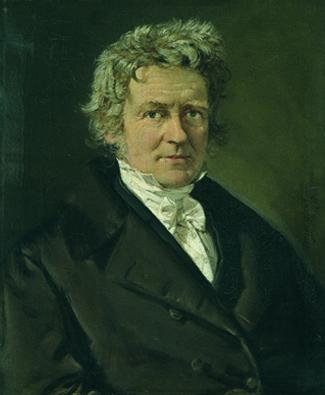
Friedrich Bessel and the Stars

Friedrich Bessel (1784-1846)
from Wikimedia Commons
This post was going to be about math, but, as usual, these scientists surprise me! The subject of this week's post is Friedrich Bessel, and if you have ever taken a course on differential equations, you have probably heard his name in reference to Bessel functions. Unlike most of the scientists featured here, Bessel appears to have had no higher education after being apprenticed at the age of 14 or 15 to work in an import-export firm. In spite of that, he made significant contributions to the fields of mathematics and astronomy. During his apprenticeship, he self-taught many things, including navigation, astronomy, and foreign languages. In 1804 he wrote a paper on Halley's comet based on observations that had been made in the 1607 and showed it to Wilhelm Olbers, a noted German astronomer, who had it published. He was appointed in 1810 to be the director of the Konigsberg Observatory (which wasn't completed until 1813). He was also given an honorary doctorate, which was important for his position as a professor!

Bessel was the first to measure the distance of a star by parallax. This is the same phenomenon that you can see if you hold you finger up relative to something in the background and watch the position of your finger change as you look at it with each eye. If you know the distance between your eyes and the angle of the shift, you can calculate the distance of the object.The only catch is that as the object gets farther away, the angle of the shift gets smaller and smaller, but scientists hoped that a shift could be observed as the Earth moves around the sun. Bessel was particularly interested because he considered his duty as an astronomer to explain why the celestial bodies moved as they did.

Tycho Brahe tried in the late 1500s, but was not able to observe parallax. Robert Hooke tried again in the 1600s and claimed to have measured the distance to Gamma Draconis, but no one believed him. He was also wrong: he calculated that it was only 0.1 light years away, when it is actually around 154. James Bradley also tried to measure this distance, but was also unable to, although as a result of his measurements he discovered the aberration of starlight--that you need to account for the movement of the earth and the speed of light in a telescope. William Herschel (who later discovered Uranus) also set about measuring stellar parallax, and tried to find a combination of a close and far star so that he could measure the slight changes in position. Instead, he discovered actual pairs of stars, which are no good since they are about the same distance.

Bessel, as the director of the new observatory in Konigsberg in Prussia, had the use of a telescope made by Joseph Fraunhofer, a maker of telescopes with a precision never seen before. Such an instrument was also in the possession of Struve, astronomer at the Dorpat Observatory in Estonia, and he and Bessel began a race. Struve published a value of the paralax of Vega, but with only 16 measurements. Bessel had been interested in the double star 61 Cygni for many years, having published a paper in 1812 on the subject, and proposed that by observing how they moved in relation to each other, the total mass of the two could be determined. Since it is one of the fastest moving stars in the sky, it was assumed to be one of the closest, and it was observable from his observatory for most of the year. Bessel presented his calculations in 1838, giving a distance of 10.3 light years, which is not too far from the current value of 11.4. Because of his careful measurements, the scientific community, including Struve, accepted his accomplishment as the first.

Bessel's careful measurements of the stars enabled him to make a new discovery as well. He observed that Sirius and Procyon, both bright stars, moved oddly, as though something was influencing them, and corroborated this with historic data as well. He posited that there must be other stars that had not been observed, and indeed, the companion star of Sirius was discovered in 1862 and was recognized as the double star that Bessel had predicted, while Procyon B was not discovered until 1896.

It was also his desire for precise astronomy that led to the Bessel functions, which are solutions to a particular differential equation. Special cases of the functions had been studied before by several Bernoullis, Euler, and Lagrange, among others, but Bessel is considered to have been the person to systematize the equations, and as such, they have been named after him. They appear often in cases involving circles and cylinders, and as such, Bessel found them useful in his studies of the stars, though exactly how I do not know. If it were not for this, people might have never heard his name, but I wonder which accomplishments he would most want to be known for? (And hopefully whatever it was isn't one of the ones that I left out of this short summary.)


Selected Works by Bessel
  • "Über den Doppelsterne Nro. 61 Cygni", Monatliche Correspondenz 1812, 26, 148-63.
  • "On the parallax of 61 Cygni", Monthly Notices of the Royal Astronomical Society 1838, 4, 152-161. The beginning is worth a read, as he discusses some of the difficulties that he encountered both with the measurements and the calculations associated with them.
  • "Bestimmung der Entfernung des 61sten Sterns des Schwans", Astronomische Nachrichten 1839, 16, 65-96. doi: 10.1002/asna.18390160502. German paper on the same topic.
  • "On the variations of the proper motions of Procyon and Sirius" Monthly Notices of the Royal Astronomical Society 1844, 6, 136-141. doi: 10.1093/mnras/6.11.136a. This is also a very readable article. Of particular note is the last paragraph, where he deals with the issue of positing the existence of something that can't (or hasn't) been seen.
  • "Ueber Veränderlichkeit der eigenen Bewegungen der Fixsterne", Astronomische Nachrichten 1845, 22 (10), 145-160. doi: 10.1002/asna.18450221002. Again, a German article on the same topic.
References

Saturday, August 23, 2014

Wilhelm Ostwald

Wilhelm Ostwald (1853-1932)
 Licensed under Public domain
 via Wikimedia Commons
One of my favorite things about writing this blog is discovering the interesting interests that the scientists
that I write about had, in addition to whatever work they are remembered for. So as I started to look for information on Wilhelm Ostwald, I was fascinated to discover that there were articles discussing his involvement with color and the Bauhaus (an art school in Germany in the 20s). Ostwald ripening, which is where I had heard his name before, seems to be one of the more minor contributions that he made: Ostwald won the 1909 Nobel Prize in Chemistry primarily for his work with catalysis, wrote 45 books and about 1000 publications, and is considered one of the founders of physical chemistry.

Ostwald was born in 1853 in Riga, Russia, and became a professor at Riga Polytechnic in 1882. One of his duties was to expand the laboratory, so he toured laboratories in Germany and had the opportunity to meet many German scientists. One of the things that he did at Riga was writing a two volume textbook. Another was translating Gibb’s work on chemical thermodynamics into German, which enabled it to be more widely read in Europe than the original English. He founded, with van’t Hoff, the first journal in physical chemistry,  Zeitschrift für Physikalische Chemie. It wasn’t the first journal he founded—he later started Annalen der Naturphilosophie.

In 1887 he then moved on to a position in Leipzig as the chair of physical chemistry—the only chair in physical chemistry in Germany. That same year he first recognized that catalysis was a kinetic process when he was studying the oxidation of hydrogen iodide by bromic acid, leading to the idea that a catalyst is something that modifies the rate of a reaction without being changed its self. Later, he tried to apply this to the problem of nitrogen fixation, but his method by catalysis with iron did not work. He did, however, patent a process for making nitric acid out of ammonia using a platinum catalyst in 1902, which is still the most commonly used process for making nitric acid today.

Svante Arrhenius published a paper in 1887 on electrolytic dissociation, the first in the field of electrochemistry. Ostwald had studied salt decomposition in obtaining a degree, and returned to it, developing his dilution law. He also wrote Elektrochemie from 1893-1896, a text on the subject, in which he also included the history of the developments and biographies of the scientists involved. He also formed an electrochemical society in 1894.

After about 1900, Ostwald turned more of his attentions to ideas of natural philosophy. In one of his works, Grosse Männer,  he divided scientists into two categories, classicists or romantics. There is actually a very interesting article by Robert Deltete and David Thorsell that compares the working styles of Josiah Gibbs and Wilhelm Ostwald as examples of these two styles. Ostwald is the romantic, jumping from one idea to the next, making connections with many people and not being afraid of publishing work before it is finished. Gibbs, on the other hand, led a fairly reclusive life, taught few students, and did not publish his work on thermodynamics until it was completed to his satisfaction.

Ostwald retired in 1906, but continued being involved in many different projects, societies, and researches. One of these was Brücke (The Bridge), an organization with the goal of organizing science to make it more efficient. Ostwald had been interested in energy for quite some time, and was actually one of the last well-renowned scientists to reject atomism. He favored an energetic explanation, and as such, conserving energy in many forms was one of his interests. He even named his retirement home, which he moved to in 1906, Haus Energie.[1] Some of the things that the Bridge did were to promote Esperanto as a universal language for science, reducing the need for translations of works, and to standardize publication formats for scientific publications. Several other scientists of note were involved in the Bridge, including Svante Arrhenius, Ernest Solvay, Ernest Rutherford, and Henri Poincaré. Ostwald also became involved in the German Monistic Alliance, which also had as its aim the unification of science, but included the reorganization of society as well. Ostwald was involved in both until Brücke closed in 1914 due to lack of funding and the difficulties of unifying science during the Great War.

After World War I, Ostwald he turned his attentions to color theory. He had been a painter since at least 1884, and now turned his scientific energies to color and developing a color theory. One of his most important contributions was giving value to the color grey. He even opened a pigment factory from 1920-1923. Walter Gropius invited him to speak at the Bauhaus and he even became a trustee. Ostwald considered his contributions to color theory some of his greatest work and nominated himself for a Nobel Prize for it (while, having won a Nobel Prize, he could nominate people, one can’t nominate ones self).

Now I don’t know how many of you may be materials scientists or others interested in Ostwald ripening, but I realize I haven’t mentioned it since the first paragraph. It is because very few of the articles I read even mentioned that work, and for a little while I was convinced that I had gotten the wrong Ostwald. But it turns out that this is the right guy. Ostwald ripening, which is a thermodynamic process observed in solutions, either solid or liquid, where larger crystals grow and smaller crystals shrink, comes from his work in the late 1890s.

[1] The house has been preserved, and was recently purchased by Gerda und Klaus Tschira Stiftung and it will serve as a location for scientific meetings. (Ertl, 2009)


Selected Works by Ostwald
References

Friday, November 23, 2012

The Bunsen Burner, Spectroscopy, and Geysers

Robert Bunsen (1811-1899)
Robert Bunsen deserves to be remembered for more than his "invention" of the Bunsen burner.  He was a brilliant chemist, and did work in spectroscopy, blast furnaces, batteries, and even geology.  One of the things that I like about writing this blog is seeing just how many pies these scientists managed to get their fingers in. They were curious, and made discoveries that, even if tangential to their regular work, are in many cases still remembered.  See my last post on Bohr for one example.  Probably Bunsen's most notable research out of the field of chemistry was his foray into geysers.  In the 1840s, on a trip to Iceland to study the recently erupted volcano Mount Hekla.  But he also became curious about the geyser there and did some measurements.  He came up with a theory about how geysers work, and did a demonstration with a model geyser to show that his theory worked.  That would have been a fun demonstration to see!

His early research was in organic chemistry, and he studied arsenic compounds and arsenic poisoning. He showed that iron oxide hydrate could be used as an antidote for arsenic poisoning, and also did extensive research into cacodyl compounds.  While still a young chemist, he nearly died of arsenic poisoning and lost the use of one eye from an explosion of one of his arsenic-containing compounds.  I have not found anyone to say why he discontinued his studies of cacodyl compounds, but I think it may have had to do with their obviously dangerous effects.  The results of his work helped Edward Frankland and Friedrich Kekulé in their studies of chemical valency. Bunsen also studied blast furnaces, which were of great importance in the 1830s due to the huge amounts of iron being produced.  He showed that over half of the fuel was lost, and worked with Lyon Playfair to improve the furnaces to be more efficient and to catch potentially useful byproducts.  This work resulted in his only book, Gasometry: Comprising the Leading Physical and Chemical Properties of Gases.

When Robert Bunsen became a professor at the University of Heidelberg in 1852, he took charge of a new laboratory building.  The building was equipped with gas, and during construction, Bunsen made suggestions to the building's mechanic, Peter Desaga, regarding the burners to be used.  There had been previous burners used, including one by Michael Faraday, but his was an improvement on these and enabled the flame to be hot, sootless, and non-luminous.  A biographer wrote at his death that "The Bunsen burner is now in use everywhere from the kitchen to the research laboratory." (Crew, p. 302) Not sure how it was used in the kitchen, but there you have it.

Bunsen and Kirchhoff's spectrometer
Though I could also write about his carbon-zinc battery that was much cheaper to make and longer lasting than the previous platinum covered plates, or his invention of the ice-calorimeter and the vapor calorimeter, I do want to talk about his spectroscopic work, which is perhaps most important, and led to the discovery of two new elements.  Bunsen's work with spectroscopy was done in collaboration with Gustav Kirchhoff (Kirchhoff's Law, anyone?), whom he met in 1851.  He had already been interested in light, such as the improvement of the gas burner and showing that an electric current could create light.  Kirchhoff joined Bunsen at Heidelberg and they formed, so it seems, a great team.  Bunsen's work with electrochemistry and batteries gave him the ability to separate metals, and the non-luminous burner that he had improved meant that he could use flame tests to see the different colors that metals gave off.  Kirchhoff suggested that the colors of different metals that had similar colors might be able to be distinguished by looking at the spectra with a prism.  They found that these spectra were unique to different elements.  When they noted a new spectral blue line, Bunsen hypothesized that it was a new element and went on to distill 40 tonnes of water to isolate 50 grams of a chloro-platinic coumpound, from which he identified this new element, which he called cesium, Latin for deep blue, from the blue line in its spectrum.  In 1861 he announced the discovery of rubidium, and thereafter others used his spectroscopic methods to discover and isolate thallium, indium, germanium, gallium, and scandium.

If you are not familiar with the principle of a flame test, or even if you are because it is always cool, the following video is a nice demonstration of the different colors that different metals are, and shows the spectral lines too.


I will conclude with a sad reminder to back up your data. Bunsen also studied the spectra of rare earth metals, and had just finished a large manuscript on the subject.  He left the manuscript on a table near a glass of water, and when he came back, he found the manuscript burnt.  It took him two years to replicate the data and apparatuses.  So the equivalent of hard drive crashes are nothing new.


Works by Bunsen
References


Sunday, July 15, 2012

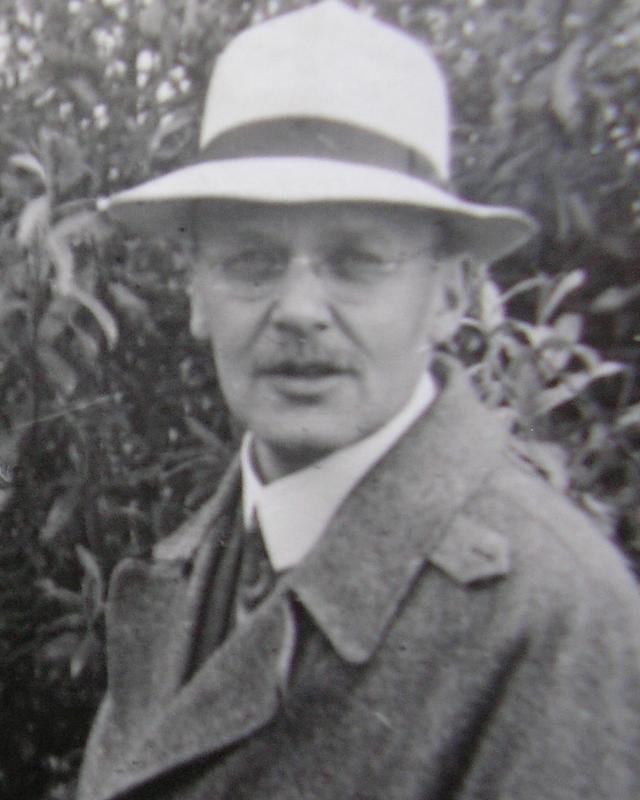
Hans Geiger and the Geiger-Müller Counter

Hans Geiger (1882 - 1945)
The first SciHistory poll is responsible for the subject of this latest post, Hans Geiger.  I will try to always have a poll open, so when you stop by, vote!  And remember that you can always leave suggestion in the comments, even if it isn't at all relevant to the subject of the post.  But on to more serious business. (And I do apologize.  In rereading this post, it is kind of dull.)

Hans Geiger was born in Germany and received his PhD from the University of Erlangen in 1906.  After graduating, he went to England to work at the University of Manchester with Ernest Rutherford (1871-1937), who won the 1908 Nobel Prize in physics for his work with radioactive substances.  One of the first projects that Geiger collaborated on in Rutherford's lab was the famous gold foil experiment, also called the Geiger-Marsden experiment (Marsden was an undergrad working with Geiger) or the Rutherford experiment.  In this experiment, where helium nuclei (alpha particles) were fired at a thin sheet of gold, Rutherford hoped to better understand the actual composition of atoms.  When some of the particles deflected at very high angles, a reasonable explanation was that rather than having the mass of an atom spread fairly evenly, there must be a highly concentrated nucleus to an atom.  This experiment was vital to the modern understanding of the structure of the atom.

Geiger continued to work with alpha-particles, developing the first detector for alpha particles in 1908.  This consisted of a wire in a low pressure chamber with a voltage applied across the wire and the outside of the tube.  The voltage is high enough that a current can almost, but not quite, flow through the gas. When an ionizing particle came into contact with the wire, it disturbs the system enough to complete the circuit, and the resulting completion can be detected by an audible click or by a pointer, depending on the type of counter. Design variables included the applied voltage, the pressure inside the chamber, and the length and diameter of the tube. Geiger continued to try to make more sensitive devices, and in 1913, after returning to Berlin to work at the German National Institute for Science and Technology, created a more sensitive device that used a needle that stuck into the middle of the detecting tube, rather than a wire connected at both ends.  This version was able to detect both alpha and beta particles.

Geiger served as an artillery officer during World War I, and when he returned to direct radiation research at the University of Kiel and the University of Tübingen, and later at Technische Hochschule in Berlin. It was while working with a post-doc, Walther Müller, at Kiel, that the next breakthrough in the Geiger counter occurred.  Geiger wanted Müller to determine the precise effect of a positive ion on the counter, and in general to test different configurations, voltages, polarities, etc.  It was as a result of this that Müller discovered a configuration that lead to an increase in sensitivity of about 100 times, which is why in many publications and discussions of Geiger counters, one finds them called Geiger-Müller counters.  The increased sensitivity of this counter made them more useful for the detection of cosmic rays, which were a subject of much interest around that time.  They could also be combined with cloud chambers to watch electrons moving individually.

After this discovery, the sources that I have found don't talk about what Geiger did next much.  He continued researching radiation in various forms, including cosmic rays and nuclear fission.  He was involved in the German efforts to create a nuclear bomb, and died a few months after World War II ended.  What I find most interesting about his story is that he, more than many of the other people that I have written about so far, worked in collaborations.  The gold-foil experiment was done with Marsden, but the conclusions about the atom were Rutherford's.  The improved Geiger counter was the work of a student.  I think this way of doing research is much more what we are familiar with today, when papers can have ten co-authors and, especially as a graduate student, one's advisor's name is on everything.  Clearly, Geiger made important contributions, but he was not working alone.


Works by Geiger
References and Further Reading
  • "Hans Geiger". Encyclopædia Britannica Online. Encyclopædia Britannica Inc., 2012. Accessed July 13, 2012.
  • Thaddeus Trenn, "The Geiger-Müller Counter of 1928", Annals of Science 43, 2 (1986), 111-135.
  • "Geiger Counter", Lemelson-MIT Inventor of the Week, February 2005.
  • M. Walter and A. W. Wolfendale, "Early history of cosmic particle physics", The European Physical Journal H (2012). doi:  10.1140/epjh/e2012-30020-1
  • Paul Frame, "A history of radiation detection instrumentation", Health Physics 88, 6 (2005), 613-637.

Friday, June 22, 2012

Arnold Sommerfeld: Father of Quantum Physicists

Arnold Sommerfeld
(1868-1951)
Arnold Sommerfeld is a man that I had not heard of until taking a course in solid state physics.  And I apologize to those of you who may hear the name with dread, but despite creating the Sommerfeld Equation, he really is an interesting guy, so please stick with me.  And I will only mention the Sommerfeld Equation one more time.  While he appears to have been known in his own time as a great mathematician and physicist, he is even better known by the students that he advised.  These include Werner Heisenberg, Wolfgang Pauli, Peter Debye, and Alfred Landé, among many others.  And these are just the students considered to be his advisees by the mathematics genealogy project.  Others famous men who studied with Sommerfeld include Linus Pauling, Léon Brillouin, and Rudolf Peierls.  He also has the unfortunate honor of being the man between 1901 and 1950 to receive the most nominations for a Nobel Prize without actually winning one, receiving eighty-one nominations.

Arnold Sommerfeld was born in 1868 in Germany, and studied mathematics and natural science at the University of Köningsberg, receiving his PhD in 1891.  He was an assistant professor at the University of Göttingen in mathematics and in mineralogy, before becoming a professor of mathematics at the Mining Academy of Claustel and then a professor of mechanics at the Institute of Technology of Aachen.  In 1906 he become the head of the Department of Theoretical Physics at the University of Munich, a position that had previously been held by Ludwig Boltzmann.  The University of Munich was well known in the field of theoretical physics, so this was both a great honor and a wonderful opportunity for Sommerfeld to influence a new generation of physicists.  He taught there from 1906 to 1935, when he retired.

When he receive the post of chair of Theoretical Physics, Sommerfeld wanted to learn more about the field, since he himself was a mathematician, not a physicist.  He asked Abraham Joffe, who had helped to discover x-rays, for help in understanding physics.  He suggested that they meet every morning at a café to discuss experimental physics, and these discussions quickly included many more scholars eager to discuss new ideas. Apparently he was a great lecturer, and was able to explain the complexities of atomic structure and other confusing topics with great clarity.

His research started out in the field of the propagation of radio waves, which now seems rather outdated, but at that time was of vital importance.  The telephone had been developed in the late nineteenth century, but by 1900, most people conveyed important communications by telegraph.  While telegraphs traveled by wires in many parts of the country, telegraphs to ships required radio waves, and the difficulties with sustaining a cable across the Atlantic meant that transatlantic communications would have to be by radio waves.  The first wireless telegraph was patented in 1897 by Guglielmo Marconi (who shared the Nobel Prize in physics in 1909 for his work with wireless telegraphy), and the first transatlantic telegraphic communications via radio waves were accomplished in 1901.  Sommerfeld's 1909 paper "The Propagation of Waves in Wireless Telegraphy" was thus of vital importance at the time, and has been oft cited.

As well as working with radio waves, Sommerfeld also worked with x-rays, still a very new and mysterious phenomenon, and his student Max von Laue showed that x-rays are also an electromagnetic wave (and won a Nobel Prize for it).  Sommerfeld went on to develop the relativistic quantum theory of the fine structure of the hydrogen spectrum.  Quantum theory is difficult enough, but adding relativity is quite an accomplishment.  I first met the name Sommerfeld when considering the electronic theory of metals, where he developed the Sommerfeld Equation as a method to approximate functions as a function of temperature. He is also famous for his work with atomic theory and atomic physics, in the end publishing a six volume series on the subject of theoretical physics and going on two lecture tours in the United States.  Unfortunately, however, he met his death as a result of an automobile accident in 1951.  As Linus Pauling wrote, "The hazard of a mechanized world has prevented his students from celebrating during his lifetime still further anniversaries of the birth of this great man."


Other works by Sommerfeld
  • "Über die Ausbreitung der Wellen in der drahtlosen Telegraphie (The propagation of waves in wireless telegraphy)", Ann. der Phys., 28 (March 1909), 665-736. (This is the same as volume 333.  They renumbered them in 2010.)  doi: 10.1002/andp.19093330402
  • "Über die Ausbreitung der Wellen in der drahtlosen Telegraphie (The propagation of waves in wireless telegraphy)", Ann. der Phys., 81 (December 1926), 1135-1153.  (Now volume 386) doi: 10.1002/andp.19263862516.

References and further reading

Thursday, February 2, 2012

Diesel and His Engine

Rudolf Diesel
(1858-1913)
I've been hoping to find a scientist or engineer with an interesting story, and I think I found one. I was looking for information on how to synthesize monoglycerides, and discovered that the process is similar to making bio-diesel, which then begs the question (at least to me), what is diesel and why is it called that?

Rudolf Diesel invented the diesel engine, and thus in a remarkable fit of (probably) proper attribution, has his name attached to it. He is an interesting character, because he wanted to improve the efficiency of engines and change the world, a vision that I think few engineers really believe in today.

Diesel had a disjunct childhood.  He was born in Paris to Bavarian parents in 1858, but was sent to school in England in 1870 as a result of the Franco-Prussian War.  Less than a year later, he was sent to the Technical School in Augsburg, Germany.  He graduated from the Techincal University in that city in 1880, and began working with Carl von Linde (1842-1934) in Munich. Von Linde had recently developed a method for refrigeration using ammonia and was therefore very interested in the studies of heat.  In 1895, he even succeeded in liquefying air.1

Drawing from Diesel's apparatus for
converting heat into work,
US Pat. #542846
Working with von Linde, Diesel was able to work on a problem that he had begun considering when an undergraduate.  Steam engines were more efficient when large, so Diesel set out to develop an engine that would still be efficient when small. He was particularly interested in the ideal engine envisioned by Sadi Carnot (1796-1832) and descrived in 1824, called the Carnot cycle. At first, Diesel designed an engine similar to a steam engine that ran on ammonia, but, though the engine did work on a smaller scale than steam, he ran into problems like leakage.  He then considered a case in which the combustion of the fuel took place in a cylinder of the engine, rather than in a boiler.  Nikolaus Otto, a German engineer, had created the first marketed internal combustion engine in 1862, so this idea was not new.  What made Diesel's engine different was that it did not need a spark to ignite the fuel, but used higher compression ratios than the existing internal-combustion engines, leading to self-ignition. It was this isothermal combustion that set the diesel engine apart.

Diesel worked on models of the engine at the Augsburg-Nuremburg Engine Works with its financial backing and that of Krupp (a company that still exists today as ThyssenKrupp).  One of the greatest challenges was creating chambers that could withstand the large pressures that Diesel required for combustion. After four years of testing and various accidents, Diesel and his manufacturing aides created a working prototype engine in 1897. The engines got off to a rocky start.  Diesel tried to market his invention immediately, but there were still some kinks to work out.  Several accidents making dents in Diesel's profits from the patents he had taken out (see the list in references for more information).

Diesel had a larger vision for his engine than just making it more efficient. He thought that his engine could transform society. Since his engines worked on a smaller scale than the steam engines, they could be used by small craftsmen and help to counteract that increase in the scale of manufacturing resulting from the industrial revolution.  Diesel was part of a movement that believed that technology could save the world.  Rather than having the workers rise up as Marxism called for, he believed that technology could better the lot of workers and narrow the class divide, so such a revolution would not be necessary.  He did, however, believe in a form of communism in which workers would pool their resources for the greater common good.  He presnted his ideas in a 1903 book entitled Solidarismus: Natürliche wirtschaftliche Erlösung des Menschen (Solidarity: The Rational Economic Salvation of Mankind).  

In 1912, questions about whether Diesel actually invented the diesel engine came to a head.  Some people argued that credit needed to go to the factory assistants, rather than Diesel.  When a history of the diesel engine was to be published, Diesel preempted whatever it might say about him by presenting a paper explaining his development of the engine at the German Society of Naval Architects.  This might seem a strange place to give such a paper, but the main use of diesel engines at that point was in ships.

The following year, Diesel was crossing the English channel and went overboard during the night.  This incident led to much speculation about how he died, though the most likely explanation is that he committed suicide.  The most interesting story that I came across was that he was killed by the German secret service to prevent him from betraying secrets about submarines to the British.


1. Carl von Linde (back)

Holmgren, E. J., "Rudolf Diesel, 1858-1913" Nature 181, no. 4611 (1958), 737-738.
Bryant, Lynwood, "The Development of the Diesel Engine" Technology and Culture 17, no. 3 (Jul., 1976), 432-446.
Thomas, Donald Jr., "Diesel, Father and Son: Social Philosophies of Technology" Technology and Culture 17, no. 3 (Jul., 1978), 376-393.

List of Diesel's patents (back)
US Pat. #542846 Method of and Apparatus for Converting Heat into Work, filed August 26, 1892
US Pat. #608845 Internal-Combustion Engine, filed July 15, 1895
US Pat. #673160 Method of igniting and regulating combustion for internal-combustion engines, filed April 6, 1898
US Pat. #654140 Apparatus for Regulating Fuel-Supply of Internal-Combustion Engines, filed September 10, 1898

US Pat. #736944 Internal-Combustion Engine, filed November 1, 1899
US Pat. #RE11900 Internal-Combustion Engine, filed July 3, 1900
US Pat. #708029 Internal-Combustion Engine, filed January 18, 1901
US Pat. #873926 Longitudinally-Displaceable Car-Body for Motor-Vehicles, filed January 25, 1908

Friday, January 27, 2012

Fick and Diffusion

Adolf Fick
(1829-1901)

I've been working on homework for a phase transformations class this week, and all of the problems have involved Fick's First and Second Laws of Diffusion, so he seemed to be a very obvious choice of subject this week.  Adolf Fick actually began his studies as a mathematician and physicist, but switched to medicine and got his PhD in 1851.  His thesis, rather than being on fluids as one might expect, was on astigmatism.  He taught at Zurich and then at Würzburg until his retirement.

I haven't been able to find anything about Fick's personal life except that he had a son, but he was quite active in his scholarly life.  He continued to apply the principles of physics and math to his study of medicine, and published works on how joints are articulated, where muscles get energy, how to measure blood pressure, how to measure how much carbon dioxide we exhale, and how we sense light and color.

I'd like to briefly introduce two of his inventions before returning again to diffusion.  He designed the first tonometer, which measures intraocular pressure (in the eye).  If you have ever been to an optometrist, they generally measure this now by puffing air into your eye.  Fick's method involved direct contact.  Using Fick's tonometer, one would press a plate against the eye and measure the force required to flatten the cornea to a specific diameter.  Fick's particular contribution was developing a mathematical way to converting the surface area of the contact between the eye and a plate and the force exerted on that plate into a measure of the pressure within the eye.  This relationship is often called the Imbert-Fick Law, since it was also discovered by Armand Imbert (1850-1922). The tonometer and Fick's studies of eyes led his nephew, also called Adolf Fick (1852-1937), to develop the first contact lenses in the late 1880s.1

Another of Fick's major contributions to medicine is known as Fick's principle or Fick's method.  I had never heard of these before researching this post, but perhaps those of you with a background in medicine will be more familiar with them.  Fick's principle provides a method for measuring cardiac output, or how much blood is being pumped by the heart.  He assumed that the rate at which oxygen is consumed is proportional to the rate of blood flow and the rate of oxygen absorption by red blood cells. By comparing the amount of oxygen in the blood entering and exciting the lungs, the rate of oxygen absorption can be measured, and from this the rate of blood flow can be deduced as being the rate of oxygen absorption over the difference in oxygen.  This principle can also be applied to blood flow through other organs, but as you can imagine, it is invasive and requires drawing and analyzing blood and oxygen consumption, but despite this, Fick's method is still referenced in literature today.

But back to diffusion.  Fick began his studies of diffusion after noticing that Thomas Graham (1805-1869), though he studied diffusion of salts in water and gases, had not developed a fundamental law describing diffusion.  Fick sought to rectify that.  He did not start from scratch, however, but recognized that the diffusion of atoms would be similar to the diffusion of heat.  Equations regarding heat transfer had been formulated in 1811 by Joseph Fourier (1768-1830). Fick pointed out that these equations had already been applied by Georg Ohm (1789 – 1854) to the diffusion of electricity in a conductor, so he set out to apply them now to the question of diffusion of liquids.  He published his paper On Liquid Diffusion in 1855 at the age of 26.

Top: Fick's equation
Bottom: modern equation
Fick's second law is the first equation on the right. He concluded his paper by saying that "such an hypothesis may serve as the foundation of a subsequent theory of these very dark phaenomena."2  On the whole, he was right.  The form of the second law has not changed from his initial statement except to be extended into three dimensions and to allow for the diffusion coefficient to be dependent on concentration.  The similarity can be seen in the second equation, which is that found in my textbook today.

I will leave you with that, and go and finish my diffusion homework.

[1] Mark, Armand Imbert, Adolf Fick, and their tonometry law, Eye (2012) 26, 13–16.
[2] Fick, On Liquid Diffusion, Philosophical Magazine, 10, no. 63, July 1855.

Sunday, January 1, 2012

More than a Flask: Emil Erlenmeyer

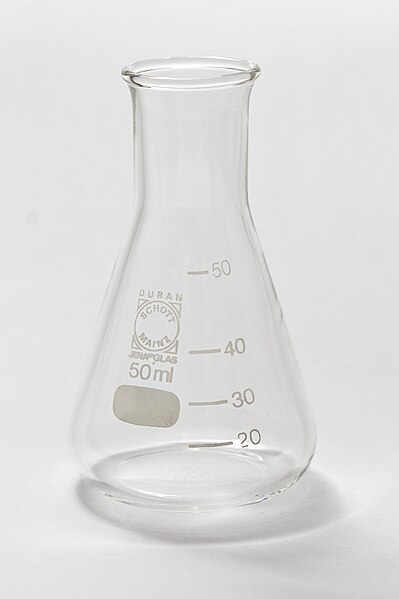
An Erlenmeyer Flask
(Photo by Lucasbosch and
used under the CC licence)
When learning one's way about the laboratory and it's equipment, it is easy to see how glasswares such as the volumetric flask and graduated cylinder got their names.  The Erlenmeyer flask, however, is not at all descriptive, which perhaps stems from the fact that an easy name including a suggestion of its use or shape would be hard to come by.  Maybe a swirling flask, or a narrow-neck flask?  But whatever else it could be called, what has come down to us in the lab today is the name of the flask's inventor, Emil Erlenmeyer.

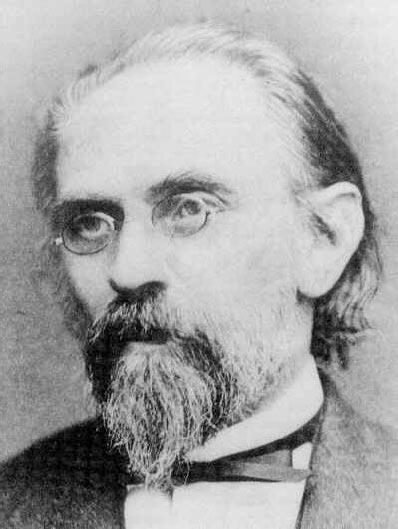
Emil Erlenmeyer
(1825-1909)
Erlenmeyer's full name was Richard August Carl Emil Erlenmeyer, so it is easy to see why he went with only Emil.  He began his studies as a chemist, and then turned to pharmacy in the 1840's and became an apothecary. Recall, however, that this was hardly a time of sophisticated medicine.  Florence Nightingale and her pleas for sanitation would not come until the next decade, and the effectiveness of the plethora of pills we have today was unheard of.

He returned to chemistry, however, and began on an academic career in German universities, studying at the University of Geissen and then becoming a professor at the University of Heidelberg.  I haven't been able to find a good story about how he created the Erlenmeyer flask, which he did in 1861, but since he was working in the lab experimenting with chemicals, it is easy to see why he did so. The shape has two main benefits: the shape, being wider at the bottom, makes it easier to swirl liquids without them splashing out, and the narrow neck reduces the amount of air exchange. He wasn't alone in working on improving laboratory equipment. Robert Bunsen, who had invented the Bunsen burner in the 1850s, was also a professor at the University of Heidelberg.

After invention of his flask, he had many more years to enjoy the fruits of his labors and the greater ease that the flask gave him in performing his experiments.  He published, according to a German website, at least twenty-seven articles, including several on cinnamic acid and other issues affecting organic chemistry.1   Another notable organic chemist was also working at Heidelberg when Erlenmeyer was there, August Kekulé, who was the first to write the structure of benzene as alternating double bonds.  The precise structure of molecules was a question that Erlenmeyer went on to study further.

Erlenmeyer's most memorable contribution to organic chemistry, though not as good for his name recognition as the flask, is "Erlenmeyer's Rule."  He developed this in the 1880s, by which point he was teaching at and retiring from the Munich Polytechnic School.  When I took organic chemistry, I don't recall this principle being called Erlenmeyer's Rule, though a quick literature search revealed that the name is still used.  Erlenmeyer's Rule says that if there is a hydroxyl group attached to a double bonded carbon, tautomerization will occur into the ketone or aldehyde form.  I wish I had known it had a name in organic chemistry, because I tended to forget this when writing the result of a reaction, and it would have been much better to blame it on a rule!

[1] DFG on Emil Erlenmeyer And if you are in Germany, you can register and read them for yourself! I, however, do not speak German and am now wishing that I did.