Tuesday, May 20, 2014

The Way the Atom Splits: Lise Meitner, fission, and weighty elements

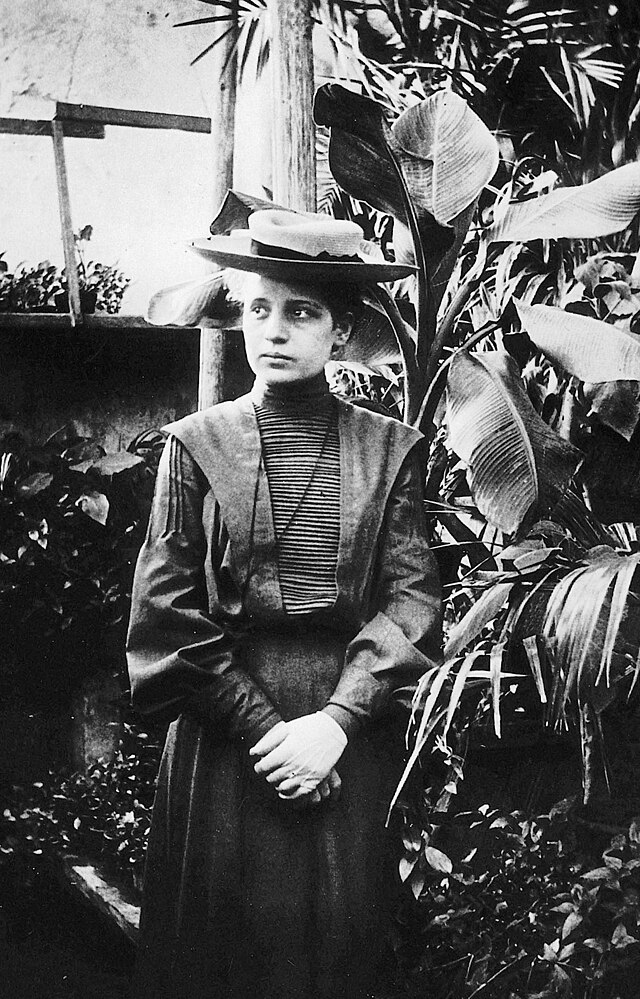
Lise Meitner (1878-1968)
(photo from Wikimedia Commons)
So far, I’ve written about people whose names are memorialized in scientific equipment, equations, and units, but not yet in that most permanent place, an element name. And to rectify that omission, today’s subject is Lise Meitner, the eponym of element 109, meitnerium (Mt).

Lise Meitner was born in Vienna in 1878 and although Protestant, had Jewish roots that will be important later. She attended school and after was tutored in mathematics and physics to enable her to pass the Matura exam, which was required before one could study in a university. She went to the University of Vienna, and enjoyed the lectures by, among others, Ludwig Boltzmann. Her thesis was on “Heat Conduction in Inhomogeneous Materials”, where she showed experimentally one of Maxwell’s formulas related to conduction. Here second paper was on Fresnel’s reflection formulae. Both of these had very little to do with the subjects of her later work.

After Boltzmann’s death in 1906, Meitner began helping Stefan Meyer with his work in radioactivity, measuring alpha and beta radiation. Around the same time, Max Planck visited the University, and she decided that she wanted to go to Berlin for a few semesters to learn more about physics. So in 1907, Meitner went off to Berlin for what turned out to be much longer than a few semesters. She attended lectures, but also went to the head of the institute of experimental physics, Heinrich Rubens, to ask if she could work in his lab. He suggested instead that she work with Otto Hahn, who was looking for a physicist who knew something about radioactivity. This work led to two very fruitful collaborations. Meitner also served as Planck’s assistant from 1912-1915.

Her first notable discovery was made around WWI. In 1913, Hahn and Meitner moved their lab from the University of Berlin to the Kaiser Wilhelm Institute für Chemie. This proved to be very useful for their studies of radioactivity, because the new lab was not contaminated by radiation, so they could do more sensitive experiments. One experiment that they were particularly interested in was looking for an element which produced actinium (element 89). Actinium’s place in the periodic table had been determined in 1913, and according to the displacement laws developed by Frederic Soddy and Kasimir Fajans, also in 1913, actinium could be produced by beta emission from radium or alpha emission by an unknown element 91. Fajans and Oswald Göhring discovered a new element when observing the beta-decay of Thorium-234. It had a very short half-life, and, claiming discoverer’s privilege, they named it brevium. It was a beta emitter, however, and could not produce actinium, though they were close--they had discovered element 91, just not the isotope that that would decay into actinium.

Meitner and Hahn worked to improve the technique Fajans had developed to separate brevium, but still wanted to find an isotope that produced actinium. When WWI started, Hahn was conscripted to serve in the special gas warfare unit that was run by Fritz Haber. This, along with the fact that most of the lab assistants were also serving in the war, meant that Meitner did most of the lab work by herself for the next several years, though Hahn was able to come back a few times and consult. Meitner did go off from 1915-1916 to serve as a nurse in Austria, but chafed at all of the time she was not busy and went back to the lab. She worked on substances derived from pitchblende and monitored them alpha emissions to try to discover the isotope that would lead to actinium. She needed more pitchblende, which, during the war, proved difficult. After trying several times, she was finally able to obtain a sufficient amount to determine the half-life of the alpha emitter that she had found. She and Hahn submitted a paper in March of 1918 entitled “The Mother Substance of Actinium, a New Radioactive Element of Long Half-Life”. They called the element protoactinium, which was shortened in 1949 to protactinium. Although they were not the first to discover element 91, Fajans and Göhring agreed that brevium was a silly name for an element that had isotopes with such long half lives, and agreed to the name. Soddy had also been working on the problem, and published their results in June of 1918, but acknowledged themselves beaten, and everyone agreed to the name.

Meitner obtained her own lab in 1917 as part of the department for radioactivity, and she and Hahn ceased their collaboration in 1920. From 1920-1934 she worked with alpha, beta, and gamma radiation and various nuclear processes. She used a Wilson cloud chamber and was the first to observe electron-positron pair formation by gamma radiation. Meitner followed work being done in other labs, and was intrigued by Enrico Fermi’s work in 1934 where he bombarded elements with neutrons and discovered that this could cause nuclear reactions. Irène Joliot-Curie bombarded uranium with atomic particles and found elements similar to lanthanum and barium, which was a very strange result considering their positions on the periodic table. Meitner was very interested, and so she and Hahn resumed working together to look into it. They also invited Fritz Strassmann, who was skilled in chemical analysis, to join the team in 1935. Hahn didn’t believe the results that Joliot-Curie obtained, but repeated the experiments and found the same thing. It was Meitner who convinced Hahn that the lanthanum and barium-like elements they observed were actually those elements and that what he had done was split the atomic nucleus itself.

At the same time, Jews in Germany were beginning to feel the Nazi persecution, and although Meitner was Protestant, she had Jewish heritage. This was not a problem for a while, since Meitner was Austrian, not German. However, when Germany annexed Austria in 1938, everything changed. She requested permission to leave, but it was denied. Then began a chain of scientists all trying to help Meitner. Hahn and Paul Rosbaud arranged for her to leave Austria illegally. Peter Debye (in Berlin) contacted Dirk Coster (in Gronigen) who was able to obtain her entry into Holland and Coster, along with Adriaan Fokker, helped to get her from Berlin into Holland. She left July 13, 1938. From the Netherlands, Meitner went to Sweden with further help from Debye and Bohr. Niels Bohr had begun working around 1932 to find persecuted Jewish scientists positions in foreign institutions, and it was through his efforts that she was given a position at the Nobel Institute for Experimental Physics in Stockholm, although she complained about having a lack of equipment there.

Meitner continued to advise the research on fission, but had to do it from afar. From December 1938 to early 1939 she worked with her nephew Otto Frisch to develop a theoretical interpretation of the fission that Hahn and Joliot-Curie had observed. Meitner and Frisch published the paper together, but because of the political situation, Hahn working in Germany did not want to publish the paper on fission with Meitner, and her name was left off. Hahn received the 1944 Nobel Prize for the discovery of fission, and Meitner was recognized as a collaborator in the presentation speech. Her paper with Frisch, however, had shown that fission could actually occur and that there was enough energy to split the atom, rather than just break off a piece, and that when it did split, it released huge amounts of energy.

In 1943 she was offered a post with the British scientists going to Los Alamos and in 1947 Fritz Straßmann invited her to join him at the Kaiser-Wilhelm-Institut, but she refused both offers. She retired to Cambridge in 1960, joining Otto Frisch and other relatives there. In 1966 she, Hahn, and Straßmann shared the Enrico Fermi Award for the discovery of the fission of Uranium. Meitner died in 1968 and her tombstone bears the epitaph “A physicist who never lost her humanity.”

Now, as I mentioned at first, Lise Meitner has an element named after her, but if you were paying attention, I haven't talked about its discovery. This would not come until 1982 when element 109 was discovered by a group in Darmstadt. Elements 104-109 were all discovered between 1964 and 1982, some of them by several labs, each of which named the elements, and meitnerium got caught up in these disputes, even though the discovery and name were not disputed. The groups at Lawrence Berkley and Dubna both claimed to have discovered elements 104, 106, and 107 first, which made distributing naming rights difficult. The United States proposed a list, but it gave preference to the claims of the scientists from Lawrence Berkley. In 1986, IUPAC and IUPAP set up the Transfermium Working Group to try to settle who discovered the elements first. This, of course, caused responses from the scientists involved, which were published in 1993. Then the Commission on Nomenclature of Inorganic Chemistry met in 1994 and chose delegates to discuss names for the elements 101-109, which were chosen from names submitted by the various labs involved in the disputes—Lawrence Berkeley, Joint Institute for Nuclear Research in Dubna, Russia, and Gesellschaft für Schwerionen Forschung in Darmstadt, Germany. The United States then complained that Seaborgium had been removed from consideration and the American Chemical Society Committee on Nomenclature rejected the recommendations of IUPAC. Finally, in 1997, IUPAC took the issue to the general assembly and proposed a new list, which was finally accepted and element 109 was officially meitnerium.


Selected Works by Meitner
References

Wednesday, July 31, 2013

Lord Kelvin: Beyond Degrees


William Thomson, Baron
Kelvin of Largs (1824-1907)
Painted by Hubert von Herkomer
It has been a little while since I wrote on someone who gave his name to a unit, so up this week is the eponym of the Kelvin, William Thomson, who is more often referred to as Lord Kelvin, because, for the last years of his life, he was Baron Kelvin of Largs. He did not inherit the title, but was actually the first scientist to be elevated to the House of Lords, and spent most of his life as William Thomson, although he was knighted in 1866, becoming Sir William Thomson. In addition to being the first Baron Kelvin, he was also the last, as he had no heir to succeed to the title. In just a bit of reading about him, I found out that Thomson/Kelvin was interested in all sorts of things, far more than just thermodynamics. These other interests include telegraph signals, navigational aids, and the age of the earth. I have become quite caught up in his and others work on the telegraph, so I initially intended to write this only on his telegraph work, but I have become so excited about telegraphy that I decided to give it a post all of its own. So this post will focus on Kelvin's work except for telegraphy, but look forward next week (hopefully) to a post all about the telegraph, and perhaps another post on Thomson.

So that I can skip on his scientific and engineering work, I'll give only a brief summary of William Thomson's life. He was born in Belfast and moved to Glasgow as a child. He studied at the Universities of Glasgow and Cambridge (where he was on the rowing team). At the young age of 22 he took a professorship at the University of Glasgow and never left, despite other offers. He gave many lectures, including a series at Johns Hopkins University. He also owned a yacht, the Lalla Rookh, built for him in the late 1860s, and several of his inventions were for improving navigation. He published more than 661 papers/communications and took out 70 patents. After his death in 1907, he was buried in Westminster Abbey next to Isaac Newton.

The Lalla Rookh
From The Life of William Thomson by Silvanus Thompson
The Lalla Rookh was a yacht of 126 tons. Thomson was known to take it out for much of the time between the semesters at the University of Glasgow, and sailed around Scotland and even farther afield, such as Lisbon. He also used it to entertain. In 1871 he planned a cruise to the Hebrides and West Highlands with Hermann von Helmholtz, Thomas Huxley, John Tyndall and James Maxwell, though it seems only Helmholtz was actually able to make it. Having the ship inspired twenty five different patented inventions. One of these was a device for correcting compasses when the ship had a metal hull. Another was an improved sounding (depth finding) device, using a wire rather than a rope such that measurements could be taken at speed.

The purchase of the ship may also have lead to his increased interest in fluid mechanics, which occurred in 1867, and was one of the subjects he discussed with Helmholtz on their journey in 1871. But his interest in fluid mechanics had a little remembered result as well--the idea of vortex atoms. Remember, the structure of the atom was not known in the mid-19th century. A common standard for atomic weights was not determined until 1860, and Mendeleev published the first periodic table in 1869. Even then, people didn't know what made up an atom. J. J. Thomson discovered the electron in 1897, and Rutherford's famous experiment which proved the existence of an atomic nucleus was not until 1909, after Kelvin's death, so the question of the nature of the atom was wide open. William Thomson spent considerable time developing the idea of vortex atoms, based on the descriptions of fluid motion made by Helmholtz, who had expanded descriptions of fluid motion to include more irrotational motion. This theory suggested that atoms are vortexes (such as smoke rings) in the ether that makes up space. By around 1883, Thomson began to feel that his theory was not sufficient to explain matter, but he had gotten other scientists thinking about the idea and furthered the field of hydrodynamics.

There is certainly more to be said, and I had hoped to say it, but hopefully that whets your appetite and you will go looking for more information on your own. The references should be quite helpful. And perhaps I will return to Kelvin at some point to talk about absolute zero, electricity, and the age of the earth. But if I try to cover them now, this post will never be finished.


Miscellaneous Works by Thomson
References

Thursday, June 27, 2013

Erudite Euler

Leonhard Euler (1707-1783)
Up this week is Euler, the great mathematician. It is impossible for me to do him justice in this post, because of the shear volume of his work and my lack of knowledge about mathematics. If you would like to read more about him, please look at some of the articles in the references. These ones are particularly good.

I mostly know of Euler from two things-Euler's method, which was an approximation method I used in calculus, and Euler's formula, which could actually mean many things, but in this case I refer to his formula that relates exponential and trigonometric functions, eix = cos(x) + isin(x), and is perhaps seen more commonly in less scientific circles in the particular form where x = π, where it simplifies to eiπ = 1. These are both definitely important, and I used the latter in about every other homework that I did this year, but Euler considered many more applied problems than this small sample size would suggest.

Leonhard Euler was the son of a minister and originally intended to study theology. Fields of study were different in the 18th century, though, and at the conclusion of his master's degree he gave a lecture comparing the natural philosophy of Newton and Descartes. At the University of Basel he studied, among other things, mathematics under the tutelage of Johann Bernoulli, who encouraged him to study mathematics more pointedly and was of much help in later years as well. As a young man, Euler competed for the prize question of the Paris Academy of Sciences, a competition open to the greatest scientific minds in Europe, and came in second. Not bad. In later years, he came in first twelve times. He applied to a position in physics at the University of Basel and failed, but then was invited to the Academy of Sciences in St. Petersburg, where he was devoted mainly to mathematics. He stayed in St. Petersburg from 1727-1741. He was then invited to help found the Academy of Sciences in Berlin, Prussia. He did not get along well with Frederick II, though, and when rebuffed from the position of president of the Academy, returned to St. Petersburg in 1766 at the invitation of Catherine II, and stayed there until his death in 1783.

In setting down to consider the accomplishments of Euler, I found it interesting to note who had gone before. Nicholas Fuss, one of Euler's students, in his eulogy on Euler, said:
At the time when Mr. Euler entered into mathematics, nothing could be more discouraging. A mediocre talent simply could not expect to make a name for it and it was best to choose another career or to distinguish one brilliantly. The memory of the recently deceased great men that had been part of the past century and the beginning of ours was still particularly fresh in our minds. Hardly had Newton and Leibniz altered the face of geometry when they died and we had not yet forgotten the important services that the discoveries of Huyghens, Bernoulli, Moivre, Tschirnhausen, Taylor, Fermat and so many other mathematicians had provided to all the branches of mathematics.
Euler clearly chose the second option: "to distinguish one brilliantly". Rather than consider that mathematics had been exhausted, as one might think, or even that certain areas had, he pursued many different avenues and pushed mathematics in many new and old directions.

He tackled the field of mechanics in two volumes, introducing to it integral and differential calculus. He was also very interested in sound, and had written a thesis on it when applying for the position in Basel. But he returned to the subject in St. Petersburg, and extended his writings to include the emotions that sounds can evoke. There he also developed the Γ function (which gives factorials for positive integers, but can be applied to non- and negative integers as well), and the constant γ, called Euler's constant. He also developed the concept of the fuction, and the notation still used today of f(x). While writing on complex and novel mathematical ideas, Euler also wrote works on more basic subjects, like textbooks on arithematic for use in Russian schools, and Théorie complete de la construction et de la manœuvre des vaisseaux, a text for sailors on navigation. Other problems that he dealt with included optimal profiles for the teeth on gears, why disks (think pennies being spun) seem to spin faster as they fall down, the critical load for a rod to buckle, and the number of vertices, edges, and faces for polyhedra. In investigating these, he also often returned to a topic for many years after he first looked at it.

Something that undoubtedly helped his work was his prodigious memory. He was reported to be able to recite the entirety of Virgil's Aeneid (which, having read, I can assure you is no mean feat). It helps, of course, that he could read and write Latin. He was also very good at doing calculations in his head and remembering the results afterwards. This was vital to his work, especially in later years, since he lost the sight in one eye in 1735 and suffered from cataracts in the other, eventually losing his sight almost completely. That did not, however, stop his productivity, and he had his sons and others take dictation, or copy large letters from a slate.

For one with such remarkable skills, he also seems to have been quite humble and well liked, and passed up opportunities to quibble over who had discovered things first. He married twice and had 13 children, five of whom survived to adulthood. He had a fit of apoplexy while playing with one of his grandsons and drinking a cup of tea, and died a few hours later. Fuss spoke glowingly about him: how he dropped calculations for ordinary conversation, explained concepts at the level of the listener, did not hold
grudges, fought injustice where he saw it, and many other praiseworthy qualities. It has been exciting to see how a man could be at the top of his field, clearly pursuing topics that piqued his interest, and yet still  be praised as a humane, relateable, Christian man.


References
  • Marquis de Condorcet, "Eulogy to Mr. Euler", History of the Royal Academy of Sciences, 1783, Paris 1786, p. 37-68. A nice summary of Euler's life and work, free of equations and with some nice anecdotes.
  • Nicolas Fuss, "Eulogy of Leonhard Euler", read at the Imperial Academy of Sciences of Saint Petersburg, October 23, 1783. Fuss was a student of Euler and a grandson-in-law. His eulogy is longer than Condorcet's, but more personal. If you are interested in what Euler was like as a person, skip to the end. Fuss paints a wonderful picture of a caring, Christian family man.
  • Walter Gautschi, "Leonhard Euler: His Life, the Man, and His Works", SIAM Review 50, no. 1 (2008), 3-33. DOI: 10.1137/070702710. A relatively short summary of his life, providing both an outline of life events and some of his mathematical accomplishments. For a quick summary of some of his math, this is a good place to start, as this one actually includes some diagrams and equations.

Thursday, June 20, 2013

The Elusive Wulff

Wulff construction
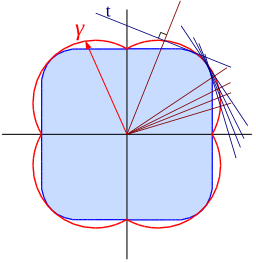
A Wulff plot (the surface energies are given in red)
Drawing by Michael Schmid
and used under the GNU Free Documentation License 
I first ran into the name Wulff last year in my thermodynamics class. He gave his name to a method for constructing the shape that a single crystal will take based on the surface energies of different crystallographic directions. It is a clever construction, and that particular homework problem was probably my favorite of the whole year. So I decided to see what I could find out about Wulff, and I have found him very difficult to track down, so I put this post on the shelf. Then in winter quarter I ran into the name again in an x-ray diffraction class where we used Wulff nets, and I decided to track him down again. It proved no easier, but I did get farther! It does seem strange, though, for a man who's name is so often used, that there is so little information on him. He doesn't even have an English Wikipedia page! The first reason for confusion about Wulff is that he was Ukrainian, so there are different transliterations of his name, but worse than that, he went by two names! Georg Wulff was the name he used in German-language publications, and thus is the name that we are more familiar with, but his name in Russian (transliterated, of course) was Yuri Viktorovich. I did, at last, find a nice article on him in the Complete Dictionary of Scientific Biography, and some information in one of my x-ray diffraction textbooks.

Image of a projection from Wulff's 1902 paper
Georg Wulff was born in the Ukraine in 1863 and studied at Warsaw University. In 1907, or 1908, or 1911, he became a professor (or teacher) of crystallography at Moscow University. Nobody seems to be able to agree. What is important, I think, is that between defending his dissertation and his death, he taught in various capacities at universities in Russia and the U.S.S.R.

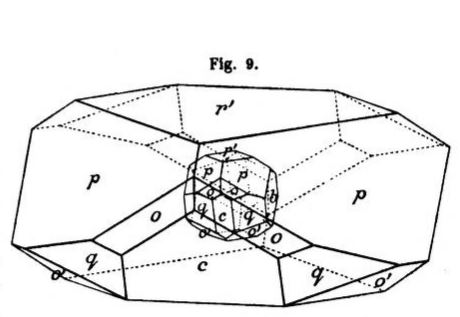
He published two important papers in 1901 and 1902 regarding crystal structures and stereographic projections. They are both in German, so I don't know exactly what they are getting at. Hammond says that Wulff proposed the Wulff net in 1909, but there seems to be an image of part of a Wulff net in his 1902 paper. His 1901 paper introduced the principles of the Wulff construction, which is a graphical method for determining the faces of a crystal that are expressed based on the surface energy of the different crystallographic directions. This idea built on Josiah Gibbs' proposal that materials want to minimize total surface energy. Wulff himself did not prove mathematically why his construction worked, but it was proved by Conyers Herring (1914-2009) in the 1950s.
Crystal diagram from Wulff's 1901 paper

Wulff was also in communication with William Henry Bragg and his son, William Lawrence Bragg, English crystallographers. Wulff derived an equation for x-ray diffraction in 1913 that was equivalent to the one proposed the year before by the Braggs, and so some people at the time called what is now known as Braggs' Law the Bragg-Wulff Law. Wulff appears to have lost out on the name because he published second, and, more importantly, he did not follow up with as many advancements on the topic as the Braggs. After that, he appears not to have taken on any new areas of study and faded into obscurity, though not without leaving his name for students of thermodynamics and crystallography to stumble upon.


Works


References

Saturday, April 27, 2013

Alexander Borodin: Chemist Composer

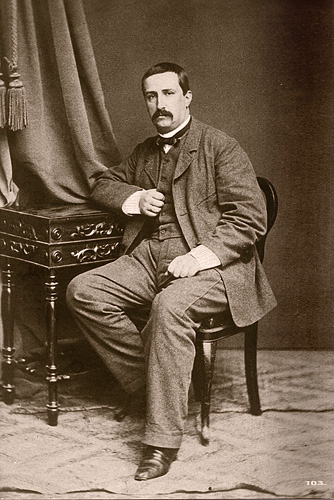
Alexander Borodin (1833-1887)
The topic of this post is at the suggestion of Melissa. Thanks for commenting! I enjoyed researching Borodin.

Alexander Borodin was a Russian composer and chemist. Those two seem to be very divergent, and in reading about him, it is interesting that I can find very little about if the two fields interacted in any practical way. In fact, his science appears to have gotten in the way of his composing. I had never heard of him, or at least thought I hadn't. It turns out I have heard some of his music. Here is an example, the Polovtsian Dances from the opera Prince Igor. I would suggest starting this and listening while continuing to read, though the ballet is quite good too.


Borodin was the illegitimate son of a Georgian prince, but he was born in Saint Petersburg and registered as the son of a serf. The prince did not forget him, though, and he was able to receive a good education. He was interested in both science and music, and wrote his first existing composition, a polka, at the age of 9. He attended the Medico-Surgical Military Academy in Saint Petersburg and started out as a doctor, though he became very interested in chemistry and studied with the chemist Nikolay Zinin, who apparently was a Russian chemist of note. Despite being at a medical school, Borodin was squeamish and therefore not well suited to being a doctor, so he continued his chemistry studies. Zinin is said (probably apocryphally) to have told him
Mr. Borodin, it would be better if you gave less thought to writing songs. I have placed all my hopes in you, and want you to be my successor one day. You waste too much time thinking about music. A man cannot serve two masters." (Podlech, from another source)
 Borodin did not give up "writing songs", but still managed to become Zinin's successor. After graduating in 1858, he traveled Europe for three years. He started in Heidelberg, working first with Robert Bunsen, though he ended up staying longer with Emil Erlenmeyer (and I've already written about them!). There he became friends with Dmitri Mendeleev (of the periodic table) and his future wife, the pianist Yekaterina Protopopova. He also attended the Karlsruhe Congress in 1860, an important milestone in understanding and standardizing atomic weights. He went with Yekaterina to Pisa and asked to work in the laboratory of de Luca and Tassinari (whom I had never heard of ). They had platinum retorts, which enabled him to work with corrosive substances. There he was able to make the first nucleophilic replacement of a halogen with fluorine, which was difficult because of the strength of fluorine bonds and fluorine's toxicity.

http://a2.ec-images.myspacecdn.com/images02/124/2fe162eddc9e4dd18038c7c64500805d/l.jpg
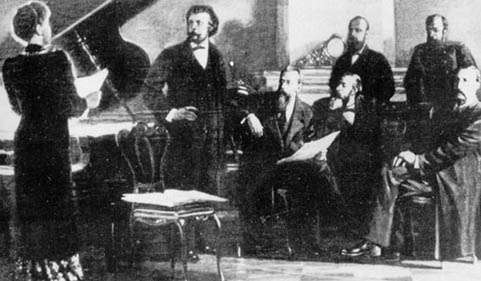
The Five. From left to right: singer, Mussorgsky,
Rimsky-Korsakov, Vladimir Stasov, Balakirev, Cui, and Borodin
Upon his return to Saint Petersburg, he became a professor, and also a member of The Five. The Five was a group of Russian composers in Saint Petersburg who were self-trained amateurs but wanted to write music that was authentically Russian. The other composers in this group were Modest Mussorgsky, Nikolai Rimsky-Korsakov, Mily Balakirev, and César Cui. Not a shabby bunch to be hanging out with!

Borodin continued his research and composing. One of the interesting things that happened in the next decade was a sort of dispute with August Kekulé. Borodin had been studying aldehydes, but Kekulé began research into their condensation in the late 1860s. It seems rather confusing who did what, but Borodin seemed to think that Kekulé was impinging on his territory. However, Borodin wasn't publishing much, so it was hard to actually make a claim. Eventually, Borodin ceded and returned to his work on amides. One of his most significant contributions in this field was a simple device to measure the amount of urea in animal urine. I have no idea why people wanted to use that, but contemporaries seemed pretty excited. After 1875, he did not publish any full papers. Instead, he spent more time on training students and advocating for women's rights. He gave lectures and provided special instruction for the female students studying medicine.

One wonders how Borodin juggled composing with science, and I found a great quote that expresses his difficulties.
In winter I can only write music when I am so ill that I don't give lectures, don't go to the laboratory, yet all the same can work a little. For this reason my musical friends, contrary to universal custom, always wish me not health, but sickness. (Letter to Liubov' Ivanova Karmalina, June 1, 1876)
Though his total oeuvre is small, the quality of his work is generally acknowledged to be good. He wrote two symphonies, some chamber music compositions, songs, and much of an opera. He worked on Prince Igor from 1869 until his death in 1887. Rimsky-Korsakov was concerned about it getting finished, and offered to help with it as much as he could. In the end, though, Rimsky-Korsakov and Alexander Glazunov had to finish it after Borodin's death, which unfortunately occurred at a fancy dress party.


References

Friday, November 23, 2012

The Bunsen Burner, Spectroscopy, and Geysers

Robert Bunsen (1811-1899)
Robert Bunsen deserves to be remembered for more than his "invention" of the Bunsen burner.  He was a brilliant chemist, and did work in spectroscopy, blast furnaces, batteries, and even geology.  One of the things that I like about writing this blog is seeing just how many pies these scientists managed to get their fingers in. They were curious, and made discoveries that, even if tangential to their regular work, are in many cases still remembered.  See my last post on Bohr for one example.  Probably Bunsen's most notable research out of the field of chemistry was his foray into geysers.  In the 1840s, on a trip to Iceland to study the recently erupted volcano Mount Hekla.  But he also became curious about the geyser there and did some measurements.  He came up with a theory about how geysers work, and did a demonstration with a model geyser to show that his theory worked.  That would have been a fun demonstration to see!

His early research was in organic chemistry, and he studied arsenic compounds and arsenic poisoning. He showed that iron oxide hydrate could be used as an antidote for arsenic poisoning, and also did extensive research into cacodyl compounds.  While still a young chemist, he nearly died of arsenic poisoning and lost the use of one eye from an explosion of one of his arsenic-containing compounds.  I have not found anyone to say why he discontinued his studies of cacodyl compounds, but I think it may have had to do with their obviously dangerous effects.  The results of his work helped Edward Frankland and Friedrich Kekulé in their studies of chemical valency. Bunsen also studied blast furnaces, which were of great importance in the 1830s due to the huge amounts of iron being produced.  He showed that over half of the fuel was lost, and worked with Lyon Playfair to improve the furnaces to be more efficient and to catch potentially useful byproducts.  This work resulted in his only book, Gasometry: Comprising the Leading Physical and Chemical Properties of Gases.

When Robert Bunsen became a professor at the University of Heidelberg in 1852, he took charge of a new laboratory building.  The building was equipped with gas, and during construction, Bunsen made suggestions to the building's mechanic, Peter Desaga, regarding the burners to be used.  There had been previous burners used, including one by Michael Faraday, but his was an improvement on these and enabled the flame to be hot, sootless, and non-luminous.  A biographer wrote at his death that "The Bunsen burner is now in use everywhere from the kitchen to the research laboratory." (Crew, p. 302) Not sure how it was used in the kitchen, but there you have it.

Bunsen and Kirchhoff's spectrometer
Though I could also write about his carbon-zinc battery that was much cheaper to make and longer lasting than the previous platinum covered plates, or his invention of the ice-calorimeter and the vapor calorimeter, I do want to talk about his spectroscopic work, which is perhaps most important, and led to the discovery of two new elements.  Bunsen's work with spectroscopy was done in collaboration with Gustav Kirchhoff (Kirchhoff's Law, anyone?), whom he met in 1851.  He had already been interested in light, such as the improvement of the gas burner and showing that an electric current could create light.  Kirchhoff joined Bunsen at Heidelberg and they formed, so it seems, a great team.  Bunsen's work with electrochemistry and batteries gave him the ability to separate metals, and the non-luminous burner that he had improved meant that he could use flame tests to see the different colors that metals gave off.  Kirchhoff suggested that the colors of different metals that had similar colors might be able to be distinguished by looking at the spectra with a prism.  They found that these spectra were unique to different elements.  When they noted a new spectral blue line, Bunsen hypothesized that it was a new element and went on to distill 40 tonnes of water to isolate 50 grams of a chloro-platinic coumpound, from which he identified this new element, which he called cesium, Latin for deep blue, from the blue line in its spectrum.  In 1861 he announced the discovery of rubidium, and thereafter others used his spectroscopic methods to discover and isolate thallium, indium, germanium, gallium, and scandium.

If you are not familiar with the principle of a flame test, or even if you are because it is always cool, the following video is a nice demonstration of the different colors that different metals are, and shows the spectral lines too.


I will conclude with a sad reminder to back up your data. Bunsen also studied the spectra of rare earth metals, and had just finished a large manuscript on the subject.  He left the manuscript on a table near a glass of water, and when he came back, he found the manuscript burnt.  It took him two years to replicate the data and apparatuses.  So the equivalent of hard drive crashes are nothing new.


Works by Bunsen
References


Wednesday, October 3, 2012

Bohr's Dueling Discovery

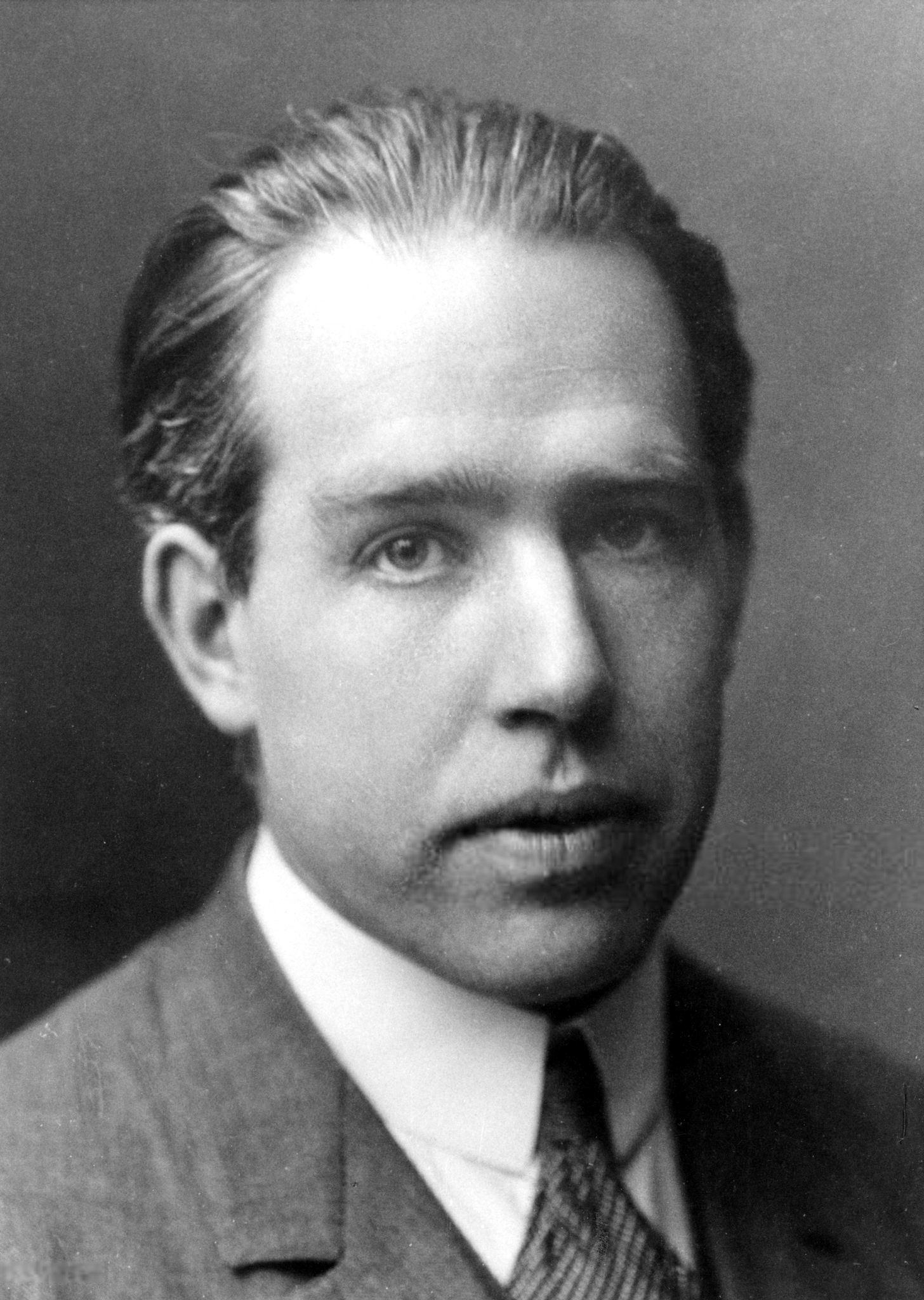
Niels Bohr (1885-1962)
Unfortunately this summer I wasn't able to finish as many posts as I had hoped, so rather than a full post today, here is a tidbit.  As per the latest poll, up this week is Niels Bohr! But there is a lot to talk about, particularly with respect to the atom, so instead, I'll talk about something you probably didn't know. One of Niels Bohr's contribution to science derived from his love of western films. He noted that the bad guys always drew first, but the good guys always won, and wondered if it was actually the case that the person who drew second won more often. He went out and purchased some cap guns and "dueled" his friends to find out. Sure enough, always drawing second, he won. Recently, proving that Bohr didn't just have faster reflexes than his friends, Andrew Welchman at the University of Birmingham confirmed that the second person to draw is milliseconds faster to the trigger. So stick to your hobbies!  You never know where they may lead.

References