Showing posts with label Physicists. Show all posts

Tuesday, May 20, 2014

The Way the Atom Splits: Lise Meitner, fission, and weighty elements

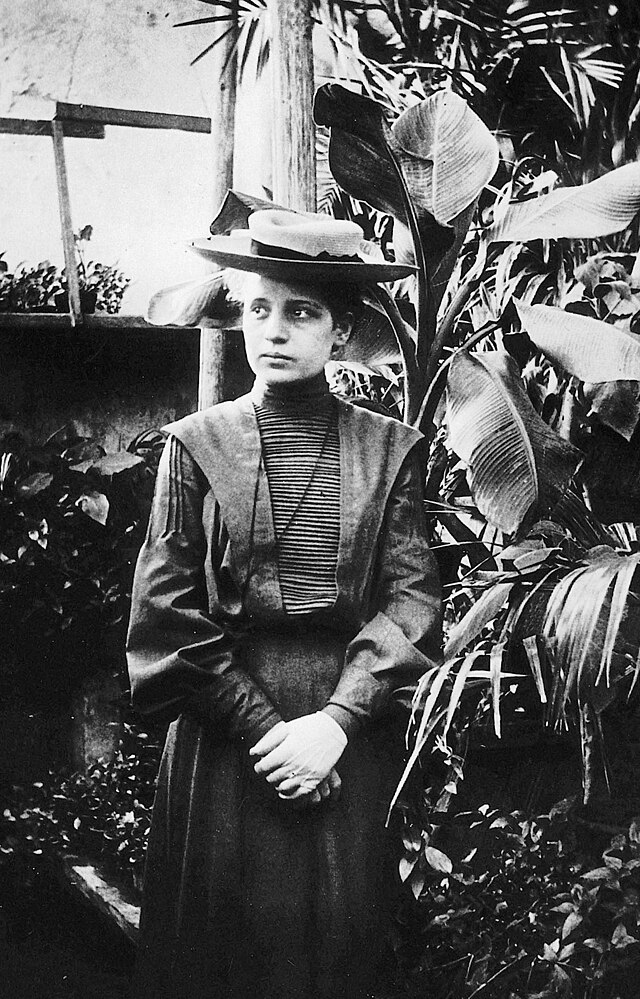
Lise Meitner (1878-1968)
(photo from Wikimedia Commons)
So far, I’ve written about people whose names are memorialized in scientific equipment, equations, and units, but not yet in that most permanent place, an element name. And to rectify that omission, today’s subject is Lise Meitner, the eponym of element 109, meitnerium (Mt).

Lise Meitner was born in Vienna in 1878 and although Protestant, had Jewish roots that will be important later. She attended school and after was tutored in mathematics and physics to enable her to pass the Matura exam, which was required before one could study in a university. She went to the University of Vienna, and enjoyed the lectures by, among others, Ludwig Boltzmann. Her thesis was on “Heat Conduction in Inhomogeneous Materials”, where she showed experimentally one of Maxwell’s formulas related to conduction. Here second paper was on Fresnel’s reflection formulae. Both of these had very little to do with the subjects of her later work.

After Boltzmann’s death in 1906, Meitner began helping Stefan Meyer with his work in radioactivity, measuring alpha and beta radiation. Around the same time, Max Planck visited the University, and she decided that she wanted to go to Berlin for a few semesters to learn more about physics. So in 1907, Meitner went off to Berlin for what turned out to be much longer than a few semesters. She attended lectures, but also went to the head of the institute of experimental physics, Heinrich Rubens, to ask if she could work in his lab. He suggested instead that she work with Otto Hahn, who was looking for a physicist who knew something about radioactivity. This work led to two very fruitful collaborations. Meitner also served as Planck’s assistant from 1912-1915.

Her first notable discovery was made around WWI. In 1913, Hahn and Meitner moved their lab from the University of Berlin to the Kaiser Wilhelm Institute für Chemie. This proved to be very useful for their studies of radioactivity, because the new lab was not contaminated by radiation, so they could do more sensitive experiments. One experiment that they were particularly interested in was looking for an element which produced actinium (element 89). Actinium’s place in the periodic table had been determined in 1913, and according to the displacement laws developed by Frederic Soddy and Kasimir Fajans, also in 1913, actinium could be produced by beta emission from radium or alpha emission by an unknown element 91. Fajans and Oswald Göhring discovered a new element when observing the beta-decay of Thorium-234. It had a very short half-life, and, claiming discoverer’s privilege, they named it brevium. It was a beta emitter, however, and could not produce actinium, though they were close--they had discovered element 91, just not the isotope that that would decay into actinium.

Meitner and Hahn worked to improve the technique Fajans had developed to separate brevium, but still wanted to find an isotope that produced actinium. When WWI started, Hahn was conscripted to serve in the special gas warfare unit that was run by Fritz Haber. This, along with the fact that most of the lab assistants were also serving in the war, meant that Meitner did most of the lab work by herself for the next several years, though Hahn was able to come back a few times and consult. Meitner did go off from 1915-1916 to serve as a nurse in Austria, but chafed at all of the time she was not busy and went back to the lab. She worked on substances derived from pitchblende and monitored them alpha emissions to try to discover the isotope that would lead to actinium. She needed more pitchblende, which, during the war, proved difficult. After trying several times, she was finally able to obtain a sufficient amount to determine the half-life of the alpha emitter that she had found. She and Hahn submitted a paper in March of 1918 entitled “The Mother Substance of Actinium, a New Radioactive Element of Long Half-Life”. They called the element protoactinium, which was shortened in 1949 to protactinium. Although they were not the first to discover element 91, Fajans and Göhring agreed that brevium was a silly name for an element that had isotopes with such long half lives, and agreed to the name. Soddy had also been working on the problem, and published their results in June of 1918, but acknowledged themselves beaten, and everyone agreed to the name.

Meitner obtained her own lab in 1917 as part of the department for radioactivity, and she and Hahn ceased their collaboration in 1920. From 1920-1934 she worked with alpha, beta, and gamma radiation and various nuclear processes. She used a Wilson cloud chamber and was the first to observe electron-positron pair formation by gamma radiation. Meitner followed work being done in other labs, and was intrigued by Enrico Fermi’s work in 1934 where he bombarded elements with neutrons and discovered that this could cause nuclear reactions. Irène Joliot-Curie bombarded uranium with atomic particles and found elements similar to lanthanum and barium, which was a very strange result considering their positions on the periodic table. Meitner was very interested, and so she and Hahn resumed working together to look into it. They also invited Fritz Strassmann, who was skilled in chemical analysis, to join the team in 1935. Hahn didn’t believe the results that Joliot-Curie obtained, but repeated the experiments and found the same thing. It was Meitner who convinced Hahn that the lanthanum and barium-like elements they observed were actually those elements and that what he had done was split the atomic nucleus itself.

At the same time, Jews in Germany were beginning to feel the Nazi persecution, and although Meitner was Protestant, she had Jewish heritage. This was not a problem for a while, since Meitner was Austrian, not German. However, when Germany annexed Austria in 1938, everything changed. She requested permission to leave, but it was denied. Then began a chain of scientists all trying to help Meitner. Hahn and Paul Rosbaud arranged for her to leave Austria illegally. Peter Debye (in Berlin) contacted Dirk Coster (in Gronigen) who was able to obtain her entry into Holland and Coster, along with Adriaan Fokker, helped to get her from Berlin into Holland. She left July 13, 1938. From the Netherlands, Meitner went to Sweden with further help from Debye and Bohr. Niels Bohr had begun working around 1932 to find persecuted Jewish scientists positions in foreign institutions, and it was through his efforts that she was given a position at the Nobel Institute for Experimental Physics in Stockholm, although she complained about having a lack of equipment there.

Meitner continued to advise the research on fission, but had to do it from afar. From December 1938 to early 1939 she worked with her nephew Otto Frisch to develop a theoretical interpretation of the fission that Hahn and Joliot-Curie had observed. Meitner and Frisch published the paper together, but because of the political situation, Hahn working in Germany did not want to publish the paper on fission with Meitner, and her name was left off. Hahn received the 1944 Nobel Prize for the discovery of fission, and Meitner was recognized as a collaborator in the presentation speech. Her paper with Frisch, however, had shown that fission could actually occur and that there was enough energy to split the atom, rather than just break off a piece, and that when it did split, it released huge amounts of energy.

In 1943 she was offered a post with the British scientists going to Los Alamos and in 1947 Fritz Straßmann invited her to join him at the Kaiser-Wilhelm-Institut, but she refused both offers. She retired to Cambridge in 1960, joining Otto Frisch and other relatives there. In 1966 she, Hahn, and Straßmann shared the Enrico Fermi Award for the discovery of the fission of Uranium. Meitner died in 1968 and her tombstone bears the epitaph “A physicist who never lost her humanity.”

Now, as I mentioned at first, Lise Meitner has an element named after her, but if you were paying attention, I haven't talked about its discovery. This would not come until 1982 when element 109 was discovered by a group in Darmstadt. Elements 104-109 were all discovered between 1964 and 1982, some of them by several labs, each of which named the elements, and meitnerium got caught up in these disputes, even though the discovery and name were not disputed. The groups at Lawrence Berkley and Dubna both claimed to have discovered elements 104, 106, and 107 first, which made distributing naming rights difficult. The United States proposed a list, but it gave preference to the claims of the scientists from Lawrence Berkley. In 1986, IUPAC and IUPAP set up the Transfermium Working Group to try to settle who discovered the elements first. This, of course, caused responses from the scientists involved, which were published in 1993. Then the Commission on Nomenclature of Inorganic Chemistry met in 1994 and chose delegates to discuss names for the elements 101-109, which were chosen from names submitted by the various labs involved in the disputes—Lawrence Berkeley, Joint Institute for Nuclear Research in Dubna, Russia, and Gesellschaft für Schwerionen Forschung in Darmstadt, Germany. The United States then complained that Seaborgium had been removed from consideration and the American Chemical Society Committee on Nomenclature rejected the recommendations of IUPAC. Finally, in 1997, IUPAC took the issue to the general assembly and proposed a new list, which was finally accepted and element 109 was officially meitnerium.


Selected Works by Meitner
References

Wednesday, July 31, 2013

Lord Kelvin: Beyond Degrees


William Thomson, Baron
Kelvin of Largs (1824-1907)
Painted by Hubert von Herkomer
It has been a little while since I wrote on someone who gave his name to a unit, so up this week is the eponym of the Kelvin, William Thomson, who is more often referred to as Lord Kelvin, because, for the last years of his life, he was Baron Kelvin of Largs. He did not inherit the title, but was actually the first scientist to be elevated to the House of Lords, and spent most of his life as William Thomson, although he was knighted in 1866, becoming Sir William Thomson. In addition to being the first Baron Kelvin, he was also the last, as he had no heir to succeed to the title. In just a bit of reading about him, I found out that Thomson/Kelvin was interested in all sorts of things, far more than just thermodynamics. These other interests include telegraph signals, navigational aids, and the age of the earth. I have become quite caught up in his and others work on the telegraph, so I initially intended to write this only on his telegraph work, but I have become so excited about telegraphy that I decided to give it a post all of its own. So this post will focus on Kelvin's work except for telegraphy, but look forward next week (hopefully) to a post all about the telegraph, and perhaps another post on Thomson.

So that I can skip on his scientific and engineering work, I'll give only a brief summary of William Thomson's life. He was born in Belfast and moved to Glasgow as a child. He studied at the Universities of Glasgow and Cambridge (where he was on the rowing team). At the young age of 22 he took a professorship at the University of Glasgow and never left, despite other offers. He gave many lectures, including a series at Johns Hopkins University. He also owned a yacht, the Lalla Rookh, built for him in the late 1860s, and several of his inventions were for improving navigation. He published more than 661 papers/communications and took out 70 patents. After his death in 1907, he was buried in Westminster Abbey next to Isaac Newton.

The Lalla Rookh
From The Life of William Thomson by Silvanus Thompson
The Lalla Rookh was a yacht of 126 tons. Thomson was known to take it out for much of the time between the semesters at the University of Glasgow, and sailed around Scotland and even farther afield, such as Lisbon. He also used it to entertain. In 1871 he planned a cruise to the Hebrides and West Highlands with Hermann von Helmholtz, Thomas Huxley, John Tyndall and James Maxwell, though it seems only Helmholtz was actually able to make it. Having the ship inspired twenty five different patented inventions. One of these was a device for correcting compasses when the ship had a metal hull. Another was an improved sounding (depth finding) device, using a wire rather than a rope such that measurements could be taken at speed.

The purchase of the ship may also have lead to his increased interest in fluid mechanics, which occurred in 1867, and was one of the subjects he discussed with Helmholtz on their journey in 1871. But his interest in fluid mechanics had a little remembered result as well--the idea of vortex atoms. Remember, the structure of the atom was not known in the mid-19th century. A common standard for atomic weights was not determined until 1860, and Mendeleev published the first periodic table in 1869. Even then, people didn't know what made up an atom. J. J. Thomson discovered the electron in 1897, and Rutherford's famous experiment which proved the existence of an atomic nucleus was not until 1909, after Kelvin's death, so the question of the nature of the atom was wide open. William Thomson spent considerable time developing the idea of vortex atoms, based on the descriptions of fluid motion made by Helmholtz, who had expanded descriptions of fluid motion to include more irrotational motion. This theory suggested that atoms are vortexes (such as smoke rings) in the ether that makes up space. By around 1883, Thomson began to feel that his theory was not sufficient to explain matter, but he had gotten other scientists thinking about the idea and furthered the field of hydrodynamics.

There is certainly more to be said, and I had hoped to say it, but hopefully that whets your appetite and you will go looking for more information on your own. The references should be quite helpful. And perhaps I will return to Kelvin at some point to talk about absolute zero, electricity, and the age of the earth. But if I try to cover them now, this post will never be finished.


Miscellaneous Works by Thomson
References

Wednesday, October 3, 2012

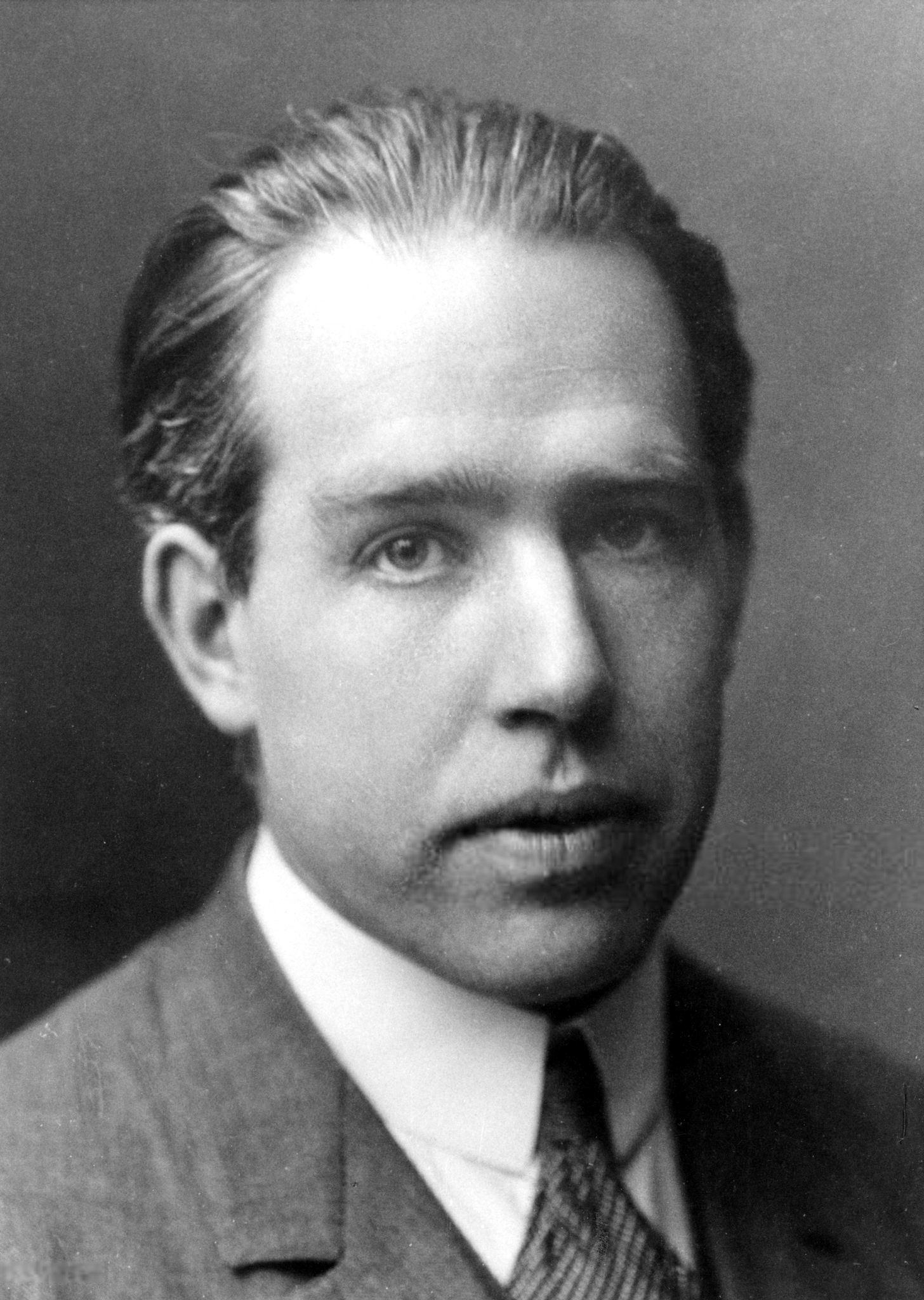
Bohr's Dueling Discovery

Niels Bohr (1885-1962)
Unfortunately this summer I wasn't able to finish as many posts as I had hoped, so rather than a full post today, here is a tidbit.  As per the latest poll, up this week is Niels Bohr! But there is a lot to talk about, particularly with respect to the atom, so instead, I'll talk about something you probably didn't know. One of Niels Bohr's contribution to science derived from his love of western films. He noted that the bad guys always drew first, but the good guys always won, and wondered if it was actually the case that the person who drew second won more often. He went out and purchased some cap guns and "dueled" his friends to find out. Sure enough, always drawing second, he won. Recently, proving that Bohr didn't just have faster reflexes than his friends, Andrew Welchman at the University of Birmingham confirmed that the second person to draw is milliseconds faster to the trigger. So stick to your hobbies!  You never know where they may lead.

References

Sunday, July 15, 2012

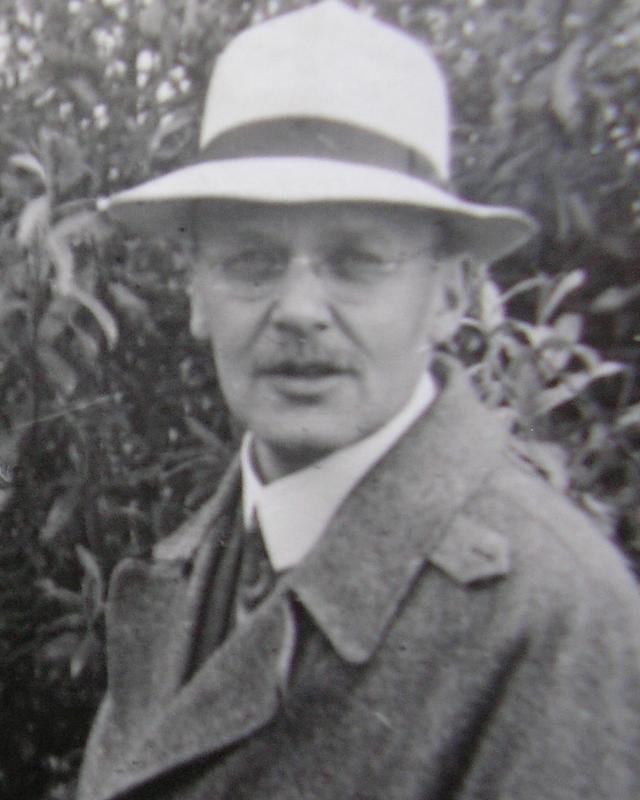
Hans Geiger and the Geiger-Müller Counter

Hans Geiger (1882 - 1945)
The first SciHistory poll is responsible for the subject of this latest post, Hans Geiger.  I will try to always have a poll open, so when you stop by, vote!  And remember that you can always leave suggestion in the comments, even if it isn't at all relevant to the subject of the post.  But on to more serious business. (And I do apologize.  In rereading this post, it is kind of dull.)

Hans Geiger was born in Germany and received his PhD from the University of Erlangen in 1906.  After graduating, he went to England to work at the University of Manchester with Ernest Rutherford (1871-1937), who won the 1908 Nobel Prize in physics for his work with radioactive substances.  One of the first projects that Geiger collaborated on in Rutherford's lab was the famous gold foil experiment, also called the Geiger-Marsden experiment (Marsden was an undergrad working with Geiger) or the Rutherford experiment.  In this experiment, where helium nuclei (alpha particles) were fired at a thin sheet of gold, Rutherford hoped to better understand the actual composition of atoms.  When some of the particles deflected at very high angles, a reasonable explanation was that rather than having the mass of an atom spread fairly evenly, there must be a highly concentrated nucleus to an atom.  This experiment was vital to the modern understanding of the structure of the atom.

Geiger continued to work with alpha-particles, developing the first detector for alpha particles in 1908.  This consisted of a wire in a low pressure chamber with a voltage applied across the wire and the outside of the tube.  The voltage is high enough that a current can almost, but not quite, flow through the gas. When an ionizing particle came into contact with the wire, it disturbs the system enough to complete the circuit, and the resulting completion can be detected by an audible click or by a pointer, depending on the type of counter. Design variables included the applied voltage, the pressure inside the chamber, and the length and diameter of the tube. Geiger continued to try to make more sensitive devices, and in 1913, after returning to Berlin to work at the German National Institute for Science and Technology, created a more sensitive device that used a needle that stuck into the middle of the detecting tube, rather than a wire connected at both ends.  This version was able to detect both alpha and beta particles.

Geiger served as an artillery officer during World War I, and when he returned to direct radiation research at the University of Kiel and the University of Tübingen, and later at Technische Hochschule in Berlin. It was while working with a post-doc, Walther Müller, at Kiel, that the next breakthrough in the Geiger counter occurred.  Geiger wanted Müller to determine the precise effect of a positive ion on the counter, and in general to test different configurations, voltages, polarities, etc.  It was as a result of this that Müller discovered a configuration that lead to an increase in sensitivity of about 100 times, which is why in many publications and discussions of Geiger counters, one finds them called Geiger-Müller counters.  The increased sensitivity of this counter made them more useful for the detection of cosmic rays, which were a subject of much interest around that time.  They could also be combined with cloud chambers to watch electrons moving individually.

After this discovery, the sources that I have found don't talk about what Geiger did next much.  He continued researching radiation in various forms, including cosmic rays and nuclear fission.  He was involved in the German efforts to create a nuclear bomb, and died a few months after World War II ended.  What I find most interesting about his story is that he, more than many of the other people that I have written about so far, worked in collaborations.  The gold-foil experiment was done with Marsden, but the conclusions about the atom were Rutherford's.  The improved Geiger counter was the work of a student.  I think this way of doing research is much more what we are familiar with today, when papers can have ten co-authors and, especially as a graduate student, one's advisor's name is on everything.  Clearly, Geiger made important contributions, but he was not working alone.


Works by Geiger
References and Further Reading
  • "Hans Geiger". Encyclopædia Britannica Online. Encyclopædia Britannica Inc., 2012. Accessed July 13, 2012.
  • Thaddeus Trenn, "The Geiger-Müller Counter of 1928", Annals of Science 43, 2 (1986), 111-135.
  • "Geiger Counter", Lemelson-MIT Inventor of the Week, February 2005.
  • M. Walter and A. W. Wolfendale, "Early history of cosmic particle physics", The European Physical Journal H (2012). doi:  10.1140/epjh/e2012-30020-1
  • Paul Frame, "A history of radiation detection instrumentation", Health Physics 88, 6 (2005), 613-637.

Friday, June 22, 2012

Arnold Sommerfeld: Father of Quantum Physicists

Arnold Sommerfeld
(1868-1951)
Arnold Sommerfeld is a man that I had not heard of until taking a course in solid state physics.  And I apologize to those of you who may hear the name with dread, but despite creating the Sommerfeld Equation, he really is an interesting guy, so please stick with me.  And I will only mention the Sommerfeld Equation one more time.  While he appears to have been known in his own time as a great mathematician and physicist, he is even better known by the students that he advised.  These include Werner Heisenberg, Wolfgang Pauli, Peter Debye, and Alfred Landé, among many others.  And these are just the students considered to be his advisees by the mathematics genealogy project.  Others famous men who studied with Sommerfeld include Linus Pauling, Léon Brillouin, and Rudolf Peierls.  He also has the unfortunate honor of being the man between 1901 and 1950 to receive the most nominations for a Nobel Prize without actually winning one, receiving eighty-one nominations.

Arnold Sommerfeld was born in 1868 in Germany, and studied mathematics and natural science at the University of Köningsberg, receiving his PhD in 1891.  He was an assistant professor at the University of Göttingen in mathematics and in mineralogy, before becoming a professor of mathematics at the Mining Academy of Claustel and then a professor of mechanics at the Institute of Technology of Aachen.  In 1906 he become the head of the Department of Theoretical Physics at the University of Munich, a position that had previously been held by Ludwig Boltzmann.  The University of Munich was well known in the field of theoretical physics, so this was both a great honor and a wonderful opportunity for Sommerfeld to influence a new generation of physicists.  He taught there from 1906 to 1935, when he retired.

When he receive the post of chair of Theoretical Physics, Sommerfeld wanted to learn more about the field, since he himself was a mathematician, not a physicist.  He asked Abraham Joffe, who had helped to discover x-rays, for help in understanding physics.  He suggested that they meet every morning at a café to discuss experimental physics, and these discussions quickly included many more scholars eager to discuss new ideas. Apparently he was a great lecturer, and was able to explain the complexities of atomic structure and other confusing topics with great clarity.

His research started out in the field of the propagation of radio waves, which now seems rather outdated, but at that time was of vital importance.  The telephone had been developed in the late nineteenth century, but by 1900, most people conveyed important communications by telegraph.  While telegraphs traveled by wires in many parts of the country, telegraphs to ships required radio waves, and the difficulties with sustaining a cable across the Atlantic meant that transatlantic communications would have to be by radio waves.  The first wireless telegraph was patented in 1897 by Guglielmo Marconi (who shared the Nobel Prize in physics in 1909 for his work with wireless telegraphy), and the first transatlantic telegraphic communications via radio waves were accomplished in 1901.  Sommerfeld's 1909 paper "The Propagation of Waves in Wireless Telegraphy" was thus of vital importance at the time, and has been oft cited.

As well as working with radio waves, Sommerfeld also worked with x-rays, still a very new and mysterious phenomenon, and his student Max von Laue showed that x-rays are also an electromagnetic wave (and won a Nobel Prize for it).  Sommerfeld went on to develop the relativistic quantum theory of the fine structure of the hydrogen spectrum.  Quantum theory is difficult enough, but adding relativity is quite an accomplishment.  I first met the name Sommerfeld when considering the electronic theory of metals, where he developed the Sommerfeld Equation as a method to approximate functions as a function of temperature. He is also famous for his work with atomic theory and atomic physics, in the end publishing a six volume series on the subject of theoretical physics and going on two lecture tours in the United States.  Unfortunately, however, he met his death as a result of an automobile accident in 1951.  As Linus Pauling wrote, "The hazard of a mechanized world has prevented his students from celebrating during his lifetime still further anniversaries of the birth of this great man."


Other works by Sommerfeld
  • "Über die Ausbreitung der Wellen in der drahtlosen Telegraphie (The propagation of waves in wireless telegraphy)", Ann. der Phys., 28 (March 1909), 665-736. (This is the same as volume 333.  They renumbered them in 2010.)  doi: 10.1002/andp.19093330402
  • "Über die Ausbreitung der Wellen in der drahtlosen Telegraphie (The propagation of waves in wireless telegraphy)", Ann. der Phys., 81 (December 1926), 1135-1153.  (Now volume 386) doi: 10.1002/andp.19263862516.

References and further reading

Sunday, April 15, 2012

Svante Arrhenius: A Man of Many Interests

Svante Arrhenius
(1859 - 1927)
I'm sorry it's been awhile since my last post, but classwork caught up with me at last. I've been planning to write on Svante Arrhenius for two months now, when he came up in several homework assignments at the same time, and I expected this to be a simple post to write, since Arrhenius is best known, in my opinion, for his equation connecting the activation energy of a process and its kinetics. First, I found out that this was not the work for which he earned the Nobel Prize in Chemistry, and, more surprisingly, I discovered that he was also one of the first scientists to work out the effects of the greenhouse effect and he also postulated global warming resulting from human CO2 production. So between classwork, research, and Arrhenius being a more complicated person to write on than I though, this post has taken a while.  I will do my best to represent what Arrhenius actually wrote about global warming, but I can't read everything he wrote about the subject for this short post, so if you are curious, I would encourage you to look at some of his original writings, which are referenced and linked throughout.

Arrhenius was born in Vik, Sweden, in 1859.  His father was a land surveyor associated with the University of Uppsala, and the following year the family moved to Uppsala.  Here Arrhenius studied at the cathedral school, showing aptitude in mathematics.  He studied chemistry, physics, and mathematics at the University of Uppsala, but wanted a more rigorous physics education and went to Stockholm to study with Erik Edlund.  His work there resulted in his thesis, "Investigations on the galvanic conductivity of electrolytes."  This post's moral for graduate students is don't be discouraged if people think your ideas are wrong.  When Arrhenius submitted this thesis to the University of Uppsala, some of the professors were doubtful of its merit.  He proposed what is now universally accepted, that some chemical species dissociate in water into positive and negative ions, and that the degree of dissociation can depend on the concentration.  Michael Faraday (1791-1867) had already proposed ionic species, but only in the presence of an electric current.  In the end, his thesis was accepted.

One of the main proponents of his ideas was Wilhelm Ostwald (1853-1932), with whom Arrhenius was able to work as a result of a travel grant from the Academy of Sciences in the late 1880s.  He also worked with Ludwig Boltzmann (1844-1906), an Austrian physicist who was a proponent of the atom and a developer of statistical thermodynamics; Jacobus van 't Hoff (1852-1911), a Dutch chemist who studied, among other things, chemical kinetics and osmotic pressure; and Frederich Kohlsrauch (1840-1910), a German physicist also interested in the conductivity of electrolytic solutions.  Arrhenius's theory of electrolytes helped to explain some abnormalities in osmotic pressure data that van 't Hoff had found, and his discussions with these men enabled him to elaborate on his theory of dissociation to explain increases from the expected boiling point elevations and freezing point depressions in some materials by species dissociation.  These men were all instrumental in the formation of the modern field of physical chemistry. It was for this work, begun in his dissertation, that he won the Nobel Prize in Chemistry in 1903.

As I mentioned before, Arrhenius also studied the greenhouse effect.  The greenhouse effect, that the Earth's atmosphere can trap heat from the sun, had been proposed earlier by Joseph Fourier (1768-1830) in the 1820s.  John Tyndall (1820-1893), proved that both water and carbon dioxide can act as what we now call greenhouse gasses.  Arrhenius took their ideas and applied them to the question of whether the cycles of ice ages could be explained by changes in carbon dioxide in the air.  He did the extensive calculations to show that if the amount of carbon dioxide in the air doubled, the temperature of the earth would increase by five to six degrees Celsius.  He published these findings in the the Philosophical Magazine and Journal of Science under the title "On the Influence of Carbonic Acid in the Air upon the Temperature of the Ground" in 1896.  He had worked with his friend Arvid Högbom (1857-1940), a professor of geology at the University of Uppsala, who had considered carbon dioxide cycles over time.  Arrhenius went further, and in his book Worlds in the Making (1908, p. 54), suggested that the burning of coal could be leading to an increase in carbon dioxide in the atmosphere, though much of it is absorbed into the oceans.

Arrhenius lived for thirty more years and did many more things, including being the head of the Nobel Institute for Physical Chemistry.  But, I've gone on for a bit about him already and hit some of the highlights, so I'm going to stop here.  If you are still interested in Arrhenius, you might want to look up his writings on popular science (including Worlds in the Making and Life of the Universe); his work on hydroelectric power, the electrification of the Swedish railroads, and immunochemistry; and his successful efforts to obtain the release of scientists made prisoners of war during World War I.  But to touch on those would mean more for you to read, and, more importantly, more for me to research, so I will leave Arrhenius with that.


Other works by Arrhenius


References and further reading

Thursday, December 29, 2011

Liquids and Gases and Van der Waals

Johannes Diderik van der Waals
(1837-1923)
It seems strange to be including a Nobel Laureate in this blog that is supposed to be about lesser known scientists, but I decided to include Van der Waals because I, for one, didn't even realize that he had won a Nobel Prize for his work until I started writing this. Van der Waals won the 1910 Nobel Prize in Physics "for his work on the equation of state for gases and liquids." His name generally appears in general chemistry courses in two places related to those very topics: Van der Waals forces, the intermolecular forces that hold all molecules together, and the Van der Waals equation, which is a correction of the Ideal Gas Law which accounts for the size of and the intermolecular interactions between gas molecules.

Van der Waals was born in Leyden, the Netherlands, in 1837 and became a schoolteacher. He did not know Latin or Greek, and thus was prohibited from taking academic examinations and going to a university. How times have changed! He could still attended classes at Leyden University, however, and he earned teaching certificates in math and physics.  When the laws requiring classical languages were changed, Van der Waals sat for examinations and in 1873 earned his doctorate at the age of 36 with a thesis entitled "Over de Continuiteit van den Gas en Vloeistoftoestand" (On the Continuity of the Gas and Liquid State). Four years later, he became the first professor of physics at the University of Amsterdam.

Here, I think, it is important to realize what Van der Waals contribution actually was and what the other discoveries of his day were.  Rudolf Clausius (1822-1888) had suggested that heat is a measure of motion only in 1850, and published his first work on entropy in 1865.  His work also relied on the Maxwell-Boltzmann distribution, which was developed in the mid-19th century by James Clerk Maxwell (1831-1879) and Ludwig Boltzmann (1844-1906). Van der Waals tried to explain the phenomenon of a "critical temperature" for gases, and determined that it was due to the fact that atoms and molecules have a finite size and interact with each other, both facts that are ignored in the ideal gas law.  After this, he developed the Law of Corresponding States, which provided the theoretical background for the experiments leading to the liquefaction of hydrogen and helium in 1898 and 1908 respectively.

Even with his later work, much of what Van der Waals is known for was in or came directly from his doctoral thesis. So to all of you graduate students out there, you may be working on Nobel Prize winning material!

If you are interested in a better understanding of Van der Waals work, his Nobel Prize acceptance speech is a good summary of his work and also of his interactions with other scientists: Van der Waals Nobel Lecture.

For more information about Van der Waals, I would highly recommend the resources provided on the Nobel Prize website, which has been the main source of information for this post:  J. D. van der Waals.

Tuesday, December 13, 2011

Anders Jonas Ångström and the ångström

Anders Jonas Ångström
(1814-1874)
As any good chemist knows, an ångström is equal to 1x10⁻¹⁰ meters and is designated by the symbol Å, complete with the little circle on top.  I’ve often wondered where the circle came from,1 but surprisingly until starting this blog had not wondered if the angstrom was named after a person, especially since it does not follow the metric system prefixes.  Anders Jonas Ångström was born in Sweden in 1814 and studied physics at the University of Upsala.  He didn't leave except for brief sojourns to further science.  He was interested in astronomical work, and studied at the Stockholm Observatory before becoming the observer at the Upsala Observatory.  The Stockholm Academy of Sciences gave him the job of analyzing the magnetic data obtained by the “Eugéne,” a ship which had travelled around the world from 1851-1853.  In 1858 he became chair of the department of physics at Upsala University (I told you he didn’t leave).

Ångström is most known, when he is thought of at all, for his work in optics which led him to be considered one of the founders of spectroscopy.  His work was primarily with things that gave off light, such as electric sparks. His greatest work was with the solar spectrum, and it is from this work that his fame as the namesake of the ångström comes.  By studying the wavelengths of light emitted by the sun using diffraction gratings, he determined in 1862 that the sun’s atmosphere contained hydrogen.  In 1868 he published a book containing a map of the entire visible solar spectrum, consisting of 1000 lines: Recherches sur le spectre solaire.  Others doing similar work used arbitrary units, but Ångström used units of ten-billionths of a meter, or at least he thought he did.  He discovered that the meter from which he measured the gratings was too short, and thus all of his calculations were off.2  He began the work to correct it, but died in 1874, before it was finished, leaving his assistant Thalén to finish the job.  A contemporary said that his “work [was] characterized by such accuracy and completeness as to render it worthy of the highest admiration, to be regarded as a pattern to all investigators.”3  Although others had attempted to make such maps, Ångström’s was the most complete and accurate, and so those who came after him used his units to describe future measurements, calling them at first Ångström units and then ångströms.

Ångströms, however, are not the best units for describing visible light, since they result in numbers in the thousands, such as 6534.  The wavelengths Ångström described are commonly now referred to in nanometers, so the values are only in the hundreds.  Chemists, however, have a great affinity for the ångström, since it is the perfect unit for describing the length of chemical bonds, which are on the order of an ångström.  So, although the angstrom is no longer used in the field in which it originated and has been relegated to the status of a “non-SI unit,” it still finds its uses in chemistry although Ångström and his work have been long forgotten.


[1] Upon further investigation, the ring is not a diacritical mark, but an integral part of the letter in Sweden.
[2] Some idea of the complication of the creation and recalculation of this map can be gathered by looking at the exercises in Robert Alexander Houstoun's  A Treatise on Light, p. 254.
[3] Heinrich Schellen, Spectrum analysis in its application to terrestrial substances, and the physical constitution of the heavenly bodies (Longmans, 1872), p. 237.  The figure is also from this book.
As a reward for reading the footnotes, here is a link to an argument that Ångström had with a fellow physicist in the Philosophical Magazine: "Observations on Certain Lines of the Solar Spectrum".  Note that the fellow who argues against Ångström, Pierre Janssen, doesn't have a unit named after him, but they both gave their names to (separate) lunar craters, and only Janssen has a crater on Mars.